Posted by Bill Brink on Nov 2nd 2026
Nettle Tea: How to Make It, Taste, Benefits & Safety
Nettle tea doesn’t taste like most herbal teas. It’s deep green, savory and a little like spinach broth, and herbalists have brewed it by the quart for generations. Here’s how to make it two ways, what it tastes like, what tradition and research actually say about it, and who should check with a doctor first, using our dried nettle leaf.
What is nettle?
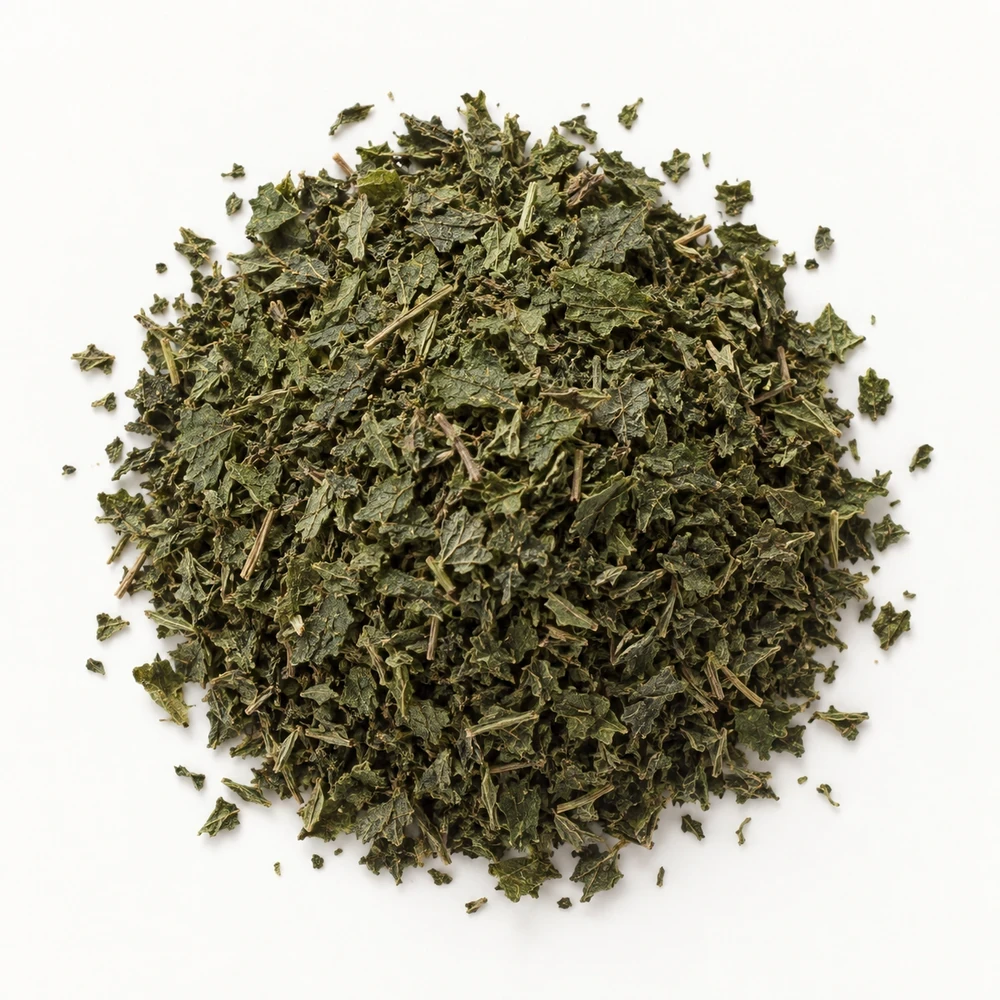
Stinging nettle is Urtica dioica, a tall perennial that spreads across damp ground and field edges throughout Europe, Asia and North America. The fresh plant is famous for its sting, but cooked or dried it’s one of the oldest food plants still in regular use: it has been eaten as a spring green and steeped as a tea across Europe for centuries. Nettle tea is made from the leaf. Our nettle is leaf picked before the plant flowers, cut and sifted.
What does nettle tea taste like?
Green, savory and faintly salty, closer to a light vegetable broth than to a typical tea, with a dry, hay-like note in the background. A short steep tastes thin and grassy. A long steep turns dark green and full-bodied. If you’d like it brighter, blend it with peppermint or lemon balm. Some people even add a pinch of salt and sip it like broth.
How to make nettle tea
A quick cup
- Bring 8 oz of water to a boil.
- Add 1 to 2 tablespoons of dried nettle leaf to a mug, infuser or teapot.
- Pour the water over the leaf, cover it and steep for 10 to 15 minutes. A four-minute steep gives you little more than green water.
- Strain and drink plain, with honey or with a squeeze of lemon.
The overnight infusion
This is the way many herbalists drink nettle: a strong, long infusion made in a jar.
- Put 1 oz of dried nettle leaf (about one 1 oz bag) in a quart mason jar.
- Fill the jar with just-boiled water, stir and cap it.
- Let it steep for 4 to 8 hours, or overnight, on the counter.
- Strain through a fine mesh strainer, pressing the leaves to get the last of the liquid.
- Refrigerate and drink within a day or two, cold or gently rewarmed.
Nettle tea blends
- Nettle and oat straw: equal parts nettle and oat straw, the classic overnight infusion pairing.
- Nettle and peppermint: two parts nettle to one part peppermint for a brighter, more familiar cup.
- Nettle and lemon balm: lemon balm adds a soft citrus note that softens nettle’s green edge.
- Nettle and rose hips: a spoonful of rose hips adds tartness and a rosy color.
Nettle tea benefits: tradition vs. evidence
Nettle has a long traditional reputation, but good human research on nettle leaf tea is limited. Here’s an honest look at both.
A spring tonic
In European folk tradition, nettle was one of the first greens of spring, eaten in soups and drunk as a tea to “clear out” the winter. That tradition is the root of today’s long nettle infusions.
A nutritious leaf
As a food, nettle leaf is a nutrient-dense green, with minerals such as calcium and potassium and vitamins including vitamin K. How much of that ends up in your cup depends on how much leaf you use and how long it steeps, which is part of why herbalists favor the long infusion.
Seasonal allergies
Nettle leaf is a traditional seasonal-allergy herb, and a few small studies have looked at it, with mixed results. There isn’t enough evidence to say it works, and it’s no substitute for the care your doctor recommends.
Leaf vs. root
Most of the clinical research you’ll see on nettle is on the root, often in combination with other herbs, not the leaf used for tea. Keep that in mind when you read claims about nettle online.
Nettle safety
- Pregnancy and breastfeeding: talk with your doctor or midwife before drinking nettle tea.
- Medications: nettle leaf contains vitamin K and has a mild diuretic effect, so ask your doctor or pharmacist first if you take blood thinners, blood pressure or diabetes medication, diuretics or lithium.
- Kidney conditions: check with your doctor before using nettle regularly.
- Allergies: stop drinking it if you notice any reaction.
- Fresh nettle: if you forage your own, wear gloves. Only fresh nettle stings.
Frequently asked questions
Does nettle tea have caffeine?
No. Nettle is an herb, not a true tea, so it’s naturally caffeine-free.
Will dried nettle sting me?
No. Drying collapses the stinging hairs completely, and cooking or steeping does the same. Only the fresh plant stings.
Can I drink nettle tea every day?
Many people drink nettle regularly, often as a jar of overnight infusion. If you’re pregnant, breastfeeding, managing a health condition or taking medication, check with your doctor first.
Can I drink nettle tea cold?
Yes. The overnight infusion is especially good chilled, and it keeps in the fridge for a day or two.
What’s the difference between nettle leaf and nettle root?
They’re different parts of the plant used in different ways. Tea is made from the leaf. Most clinical studies on nettle use extracts of the root.
Looking for more herbal tea guides? Read our guides to mullein tea, lemon balm tea and mugwort tea.
Shop Nettle Leaf