
Posted by Marco Graham on Feb 27th 2026
An Ultimate Guide to Essential Oils
An Ultimate Guide to Essential Oils
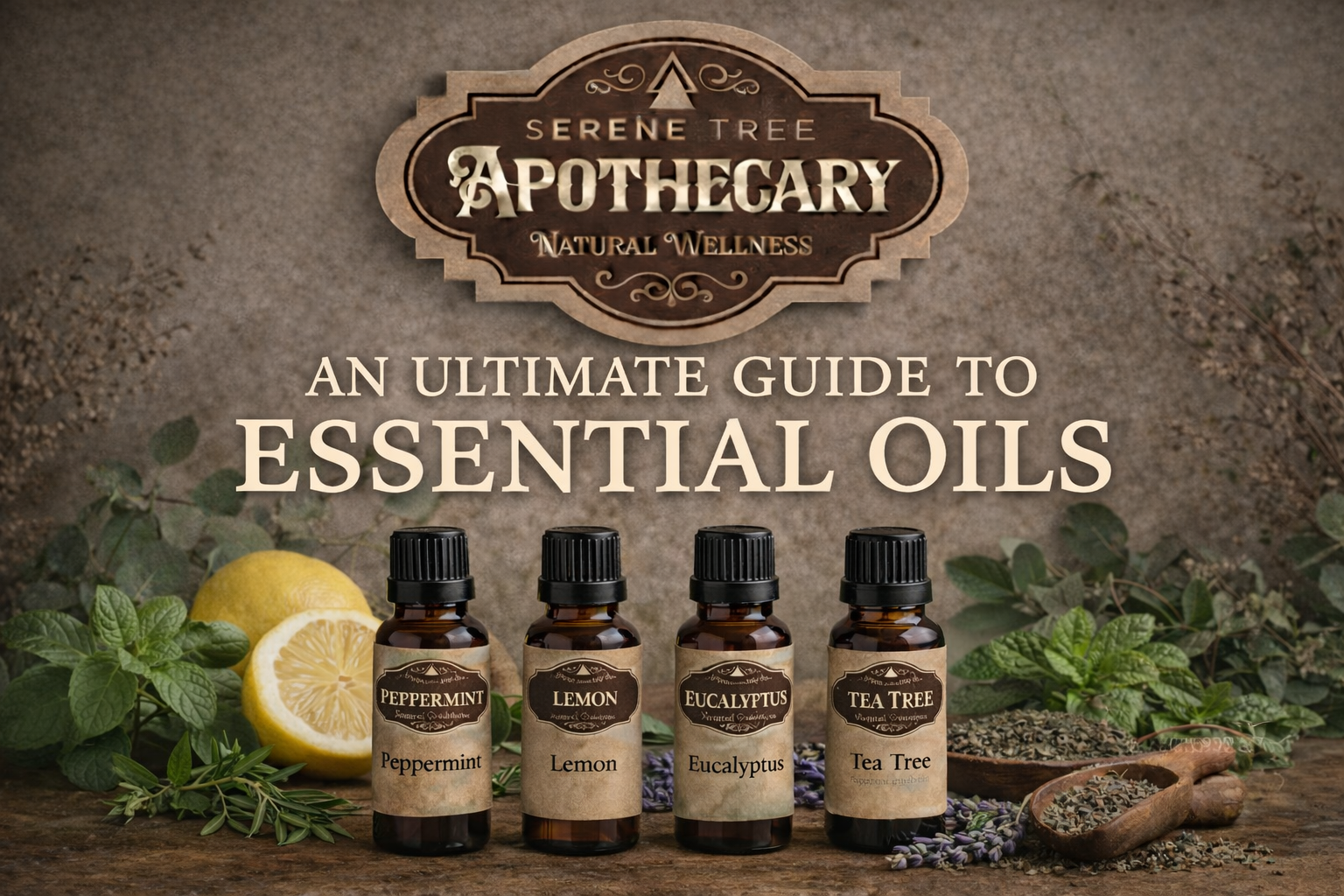
Essential oils enjoy wide popularity because botanical extracts deliver scent, mood support and skin benefits when handled with care. In this guide we explain the science behind them, show practical applications, list advantages, outline safety rules plus give blending advice for the oils stocked by Serene Tree Apothecary.
Whether you're a beginner or long timer in aromatherapy, this is your go‑to resource.
What Are Essential Oils?
Essential oils are concentrated plant substances obtained from leaves, stems, flowers, bark, roots or seeds. They contain the core aromatic and therapeutic qualities of the original plant.
They’re typically used in:
- Aromatherapy: diffusers or inhalation
- Topical application: diluted with a carrier oil
- Household care: natural cleaning or air freshening
How Are Essential Oils Made?
Essential Oils are extracted using methods that enable the preservation of the plant's properties. The following are examples of the most commonly used Extraction methods:
Steam Distillation:
Drying or steaming of the plant material causes the release of the plant's volatile oils, which are collected in a separate container from water. Essential oils produced via this method are used in many products such as Lavender, Peppermint, Eucalyptus, and Tea tree oils.
Cold Pressing:
Cold Pressing is mainly used to produce citrus oils (for example Lemon) by mechanically extracting the oils from their peels, without using any heat, to maintain its vibrant, fresh fragrance.
Resins and Specialty Extractions:
In order to preserve the delicate and complex nature of some botanicals, they require special methods of extraction that require time and slow processing.
Each of these Extraction methods will affect the aroma, strength, and therapeutic properties of the Essential Oil. Thus, the skill involved in the Extraction of Essential Oils is equal to the quality of the plant itself.
What Are Essential Oils Used For?
The ability to infuse your daily life with essential oils is endless, and there are many ways to use them daily that require minimal effort and are intentional:
Aromatherapy: You can diffuse oils for calming effects, focus, and clarity.
Topical Use: You can apply oils to your skin or muscles by diluting them with carrier oils to provide support.
Rituals and Relaxation: These practices can include moments for meditation, sleep routines, and self-care.
Home and Lifestyle: Use them to naturally revive, clean, and support your needs.
By practicing mindfulness when using essential oils, you will benefit your body both physically and emotionally..
What Are the Main Benefits of Essential Oils?
The benefits of essential oils vary by plant, but most fall into several key wellness categories: emotional support, physical comfort, skin health, and lifestyle balance.
1. Essential Oils Support Emotional Well-Being
One of the most recognized benefits of essential oils is their impact on mood and emotional balance.
Because scent is directly linked the part of the brain that governs emotions and memory, essential oils can gently influence how we feel.
Common emotional benefits include:
-
Promoting calm during stress or overwhelm
-
Supporting relaxation and restful sleep
-
Encouraging focus and mental clarity
-
Lifting mood and emotional heaviness
Oils like lavender, lemon, and peppermint are often chosen for emotional support and nervous system regulation.
2. Essential Oils Promote Relaxation and Better Sleep
Many people turn to essential oils as part of an evening start to relax routine.
Certain oils help signal safety and rest to the body, making them ideal for:
-
Nighttime rituals
-
Bedtime diffusion
-
Massage or post-bath relaxation
Used consistently, essential oils can support deeper rest and a more peaceful transition into sleep.
3. Essential Oils Support Physical Comfort and Recovery
Essential oils are often used to support the body during moments of tension, fatigue, or physical discomfort.
Depending on the oil, benefits may include:
-
Easing head or neck tension
-
Supporting muscle recovery after activity
-
Encouraging healthy circulation
-
Providing cooling or warming sensations
Peppermint and eucalyptus are commonly used in topical blends for physical comfort when properly diluted.
4. Essential Oils Help Clear Breathing and Respiratory Support
Another benefit of essential oils is respiratory support.
When diffused or inhaled, certain oils can help:
-
Promote open, deep breathing
-
Support seasonal wellness
-
Refresh indoor air naturally
Crisp, aromatic oils such as eucalyptus and tea tree are frequently used during colder months or times of congestion.
5. Essential Oils Support Skin Health Naturally
Essential oils are widely used in natural skincare routines when blended safely with carrier oils.
Potential skin-related benefits include:
-
Supporting clearer-looking skin
-
Soothing minor irritation
-
Balancing oily or dry skin
-
Enhancing natural skincare rituals
Tea tree and lavender are popular choices for skin-focused blends due to their balancing and calming properties.
6. Essential Oils Enhance Focus, Energy, and Mental Clarity
Essential oils can be both calming and energizing—depending on the plant.
Some oils help:
-
Improve concentration and alertness
-
Reduce mental fatigue
-
Support productivity and motivation
Bright, herbaceous, or citrus oils are often diffused during work, study, or creative practices.
7. Essential Oils Create Natural, Low-Toxin Living Spaces
Beyond personal care, essential oils support a cleaner, more intentional home environment.
They are commonly used to:
-
Freshen indoor air naturally
-
Support DIY cleaning blends
-
Reduce reliance on synthetic fragrances
This makes essential oils appealing to those seeking low-toxin, plant-based lifestyles.
8.Essential Oils Encourage Mindfulness and Daily Ritual
One of the most overlooked benefits of essential oils is how they encourage presence.
Using essential oils help you to breathe, apply, diffuse, or blend with intention. Over time, these small rituals support:
-
Emotional grounding
-
Stress awareness
-
A deeper connection to self-care
Are Essential Oils Natural?
True essential oils are 100% plant-derived, but not all oils on the market are created equally.
A high-quality essential oil should be:
- Free from synthetic fragrances or fillers
- Properly labeled with its botanical name
- Responsibly sourced and carefully distilled
Purity matters. The quality of an essential oil determines not only how it smells, but how it performs
Essential Oils Safety
Essential oils are powerful. Always keep these safety guidelines in mind:
Dilute before applying to skin. A common ratio is 1–3% (6–18 drops per ounce of carrier oil) for adults.
Patch test before first‑time topical use.
Avoid eyes, inner ears, broken skin, and mucous membranes.
Use caution around children, pets, and pregnant or nursing people; some oils aren’t recommended in those situations.
If irritation occurs, discontinue use and consult a healthcare provider.
How to Use Essential Oils
1) Diffusing
A diffuser disperses oil molecules in the air that is great for mood, ambiance, and respiratory support.
2) Topical
When properly diluted with a carrier oil (like jojoba, almond, or coconut), essential oils can be applied for skin, headache relief, sore muscles, and more.
3) Steam Inhalation
Add a few drops to hot water and breathe deeply, this is useful during colds or congestion.
Serene Tree Apothecary’s 12 Essential Oils (and How to Use Them)
1) Cinnamon Leaf Essential Oil
Aroma: Warm, spicy, sweet
Plant Source: Cinnamomum verum (leaf)
Benefits & Uses
- Immune support: Known for its powerful antimicrobial properties.
- Energizing: Warms the body and stimulates circulation.
- Air purification: Use in diffusers during cold/flu season (well diluted).
How to Use
- Diffuser: 1–2 drops with citrus oils.
- Topical: Highly potent — always dilute (≥1%); can be warming when rubbed on feet or chest.
Caution
May cause irritation if over‑applied. Avoid during pregnancy.
2) Clary Sage Essential Oil
Aroma: Herbal, smoky, slightly floral
Plant Source: Salvia sclarea
Benefits & Uses
- Hormonal balance: Popular for women’s wellness during PMS or menopause.
- Stress relief: Calming and grounding.
- Uplifting but soothing: Great for emotional tension.
How to Use
- Diffuser: 3–5 drops at night.
- Topical: Blend with a carrier oil for abdomen or lower back.
Tip
Pair with Lavender for soothing sleep blends.
3) Clove Bud Essential Oil
Aroma: Warm, spicy, intense
Plant Source: Syzygium aromaticum
Benefits & Uses
- Antimicrobial powerhouse: Useful for cleansing purposes.
- Muscle ease: When diluted, can help with sore muscles.
- Seasonal support: Excellent for immune season blends.
How to Use
- Diffuser: 1–2 drops with citrus oils like Lemon.
- Topical: Dilute thoroughly — only small amounts.
Caution
Clove is strong; use low dilution to avoid irritation.
4) Eucalyptus Essential Oil
Aroma: Fresh, camphorous, minty
Plant Source: Eucalyptus globulus / radiata
Benefits & Uses
- Respiratory comfort: Great during stuffy, cold weather.
- Cooling sensation: Helps breathe deeply.
- Clearing environment: Diffuse to refresh the air.
How to Use
- Diffuser: 3–5 drops.
- Steam inhalation: Add 1–2 drops to hot water and breathe in.
Tip
Combine with Peppermint for seasonal respiratory blends.
5) Frankincense Essential Oil
Aroma: Warm, resinous, complex
Plant Source: Boswellia serrata
Benefits & Uses
- Spiritual & grounding: Often used in meditation.
- Skin nourishment: Excellent for aging or dry skin (when diluted).
- Well‑being boost: Supports calming routines.
How to Use
- Diffuser: 3–5 drops for mindfulness sessions.
- Topical: Mix with carrier for face or chest.
6) Lavender Essential Oil
Aroma: Floral, herbal, soothing
Plant Source: Lavandula angustifolia
Benefits & Uses
- Sleep and relaxation: A go‑to before bedtime.
- Skin soothing: Good for minor irritations and calming skin.
- Versatile everyday oil: Safe and gentle.
How to Use
- Diffuser: 5–8 drops before sleep.
- Topical: Add to lotion or carrier oil; spot treat minor burns, bug bites.
Tip
Lavender is one of the most beginner‑friendly essential oils — great starter choice.
7) Lemon Essential Oil
Aroma: Bright, clean, citrusy
Plant Source: Citrus limon
Benefits & Uses
- Uplifting energy: Great morning diffuser blend.
- Natural cleansing: Use in DIY cleaners (avoid direct skin if sun exposure expected — citrus can be photosensitive).
- Air freshener: Helps remove odors.
How to Use
- Diffuser: 5–10 drops.
- Cleaning: Add to water and vinegar for a natural surface spray.
Safety
Avoid on skin before sun exposure.
8) Peppermint Essential Oil
Aroma: Cool, refreshing, minty
Plant Source: Mentha piperita
Benefits & Uses
- Invigorating: Helps boost alertness.
- Cooling relief: Great for tension headaches and sore muscles.
- Digestive ease: Inhalation or diluted topical behind abdomen.
How to Use
- Diffuser: 3–5 drops.
- Topical: Mix with carrier for temples or back of neck.
Caution
Avoid near eyes; can be strong for kids (use lower dilution).
9) Rosemary Essential Oil
Aroma: Herbaceous, fresh, slightly medicinal
Plant Source: Rosmarinus officinalis
Benefits & Uses
- Cognitive boost: Often used for focus and concentration.
- Hair and scalp support: Good when diluted.
- Respiratory ease: Complement to eucalyptus blends.
How to Use
- Diffuser: 3–5 drops during work or study.
- Topical: Add to carrier for scalp massage.
Tip
Combine with Lemon and Peppermint for focus blends.
10) Tea Tree Essential Oil
Aroma: Fresh, medicinal, earthy
Plant Source: Melaleuca alternifolia
Benefits & Uses
- Antimicrobial: Great for cleansing skin and environment.
- Skin support: Use (diluted) for occasional blemishes or blemish‑prone areas.
- Purifying diffuser blend: Keeps air feeling fresh.
How to Use
- Topical: Dilute 1–3% for occasional blemishes.
- Diffuser: 2–4 drops for refreshing indoor air.
Caution
Don't ingest; apply with carrier oil to avoid irritation.
11) Vetiver Essential Oil
Aroma: Deep, earthy, grounding
Plant Source: Vetiveria zizanioides
Benefits & Uses
- Emotional grounding: Excellent for stress and restlessness.
- Sleep support: Helps calm anxious minds.
- Meditative ambiance: Works well in relaxation blends.
How to Use
- Diffuser: 3–5 drops in evening blends.
- Topical: Use on feet or pulse points with carrier.
12) Ylang Ylang Essential Oil
Aroma: Sweet, floral, exotic
Plant Source: Cananga odorata
Benefits & Uses
- Mood support: Soothing, uplifting, sensual.
- Heart‑opening scent: Great for unwinding after long days.
- Hair care: Adds fragrance and conditioning support when diluted.
How to Use
- Diffuser: 3–5 drops for relaxation.
- Topical: Mix with carrier oil for massage.
Best Essential Oil Blends & Recipes
Here are some practical blends you can start with. Always dilute before topical application.
Morning Energy Boost
- 5 drops Lemon
- 3 drops Peppermint
- 2 drops Rosemary
Use: Diffuse while getting ready for the day.
Relaxing Sleep Blend
- 4 drops Lavender
- 3 drops Vetiver
- 2 drops Frankincense
Use: Diffuse 30 minutes before bedtime.
Immune Support Blend
- 3 drops Eucalyptus
- 2 drops Clove Bud
- 2 drops Cinnamon Leaf
- 2 drops Tea Tree
Use: Diffuse during cold season or when household sniffles start.
Focus & Clarity Blend
- 4 drops Rosemary
- 3 drops Peppermint
- 3 drops Lemon
Use: Diffuse during work or study sessions.
Tension Relief Roll‑On
- 8 drops Peppermint
- 6 drops Lavender
- 4 drops Frankincense
- Fill remainder of 10 mL roller with carrier oil (like jojoba).
Use: Apply to temples, neck, or wrists.
Carrier Oils & Why They Matter
Essential oils are concentrated, so carrier oils (like jojoba, almond, coconut, or grapeseed) help dilute and safely deliver them to the skin.
Benefits of common carriers:
- Jojoba: Closest to skin’s natural oils
- Coconut Oil: Light and absorbs quickly
- Almond: Great for massage
- Grapeseed: Good everyday carrier
Essential Oils Safety & Common Questions
Can I ingest essential oils?
Not without medical guidance. Ingestion should only be considered under professional supervision.
Are essential oils safe for kids?
Some are used with caution and proper dilution; others should be avoided. Always research specific safety guidelines.
Can I apply oils directly to my skin?
Only after proper dilution — many oils are too concentrated to use neat.
How long do essential oils last?
Properly stored (cool, dark place), most last 1–3 years depending on type.
Essential Oils Beginner Tips
- Start with gentle oils like Lavender, Lemon, and Frankincense.
- Use a diffuser in common areas.
- Create roller blends for daily support.
- Pair essential oils with self‑care routines: meditation, baths, bedtime.
- Keep oils away from eyes and pets (some oils are harmful to animals).