
Posted by Marco Graham on Feb 27th 2026
An Ultimate Guide to Essential Oils
✿ Rooted in Aromatherapy
An Ultimate Guide to Essential Oils
Essential oils are loved for their natural aromas, mood-supporting rituals, skincare uses, and home-care possibilities. This guide explains what essential oils are, how they are made, how to use them safely, and how to choose the right oils for your daily wellness routine.
✿ Why Essential Oils?
Botanical aromas for self-care, home, and everyday ritual.
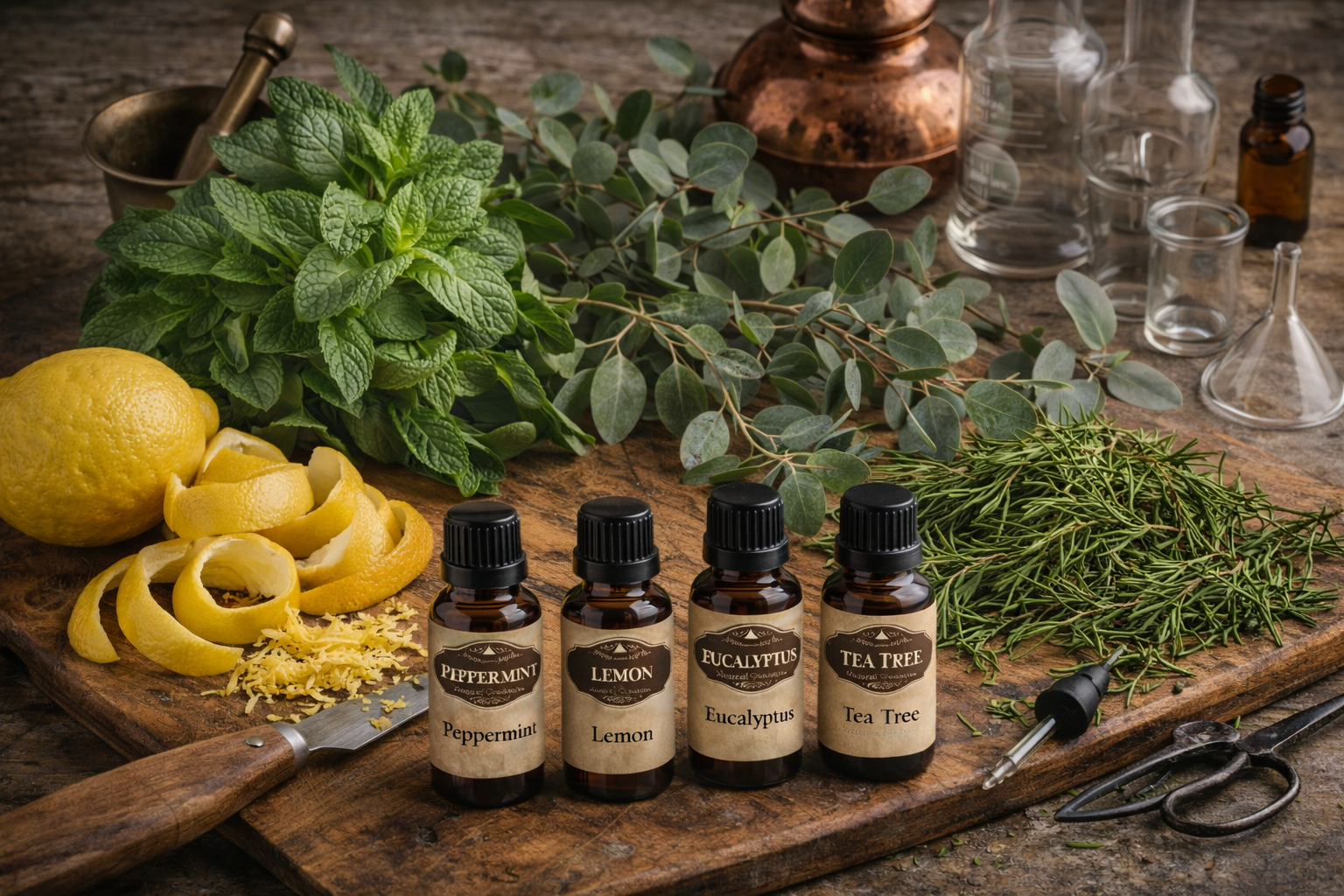
Whether you are new to aromatherapy or building a deeper natural wellness routine, essential oils offer simple ways to bring plant-based scent, comfort, and intention into your day.
Aromatherapy
Diffuse oils to create a calm, uplifting, refreshing, or grounding atmosphere.
Topical Rituals
Use properly diluted oils in massage, skincare, body care, and self-care routines.
Home Care
Add botanical aroma to DIY cleaning, natural air freshening, and low-toxin living.
Mindful Moments
A single scent can help turn daily tasks into grounding, intentional rituals.
☘ Botanical Basics
What Are Essential Oils?
Essential oils are concentrated plant extracts obtained from leaves, stems, flowers, bark, roots, seeds, peels, or resins. They capture the aromatic character of the plant and are commonly used in aromatherapy, topical blends, household care, and daily self-care rituals.
Because they are highly concentrated, essential oils should be handled thoughtfully and diluted before applying to the skin.
Extraction Methods
How Are Essential Oils Made?
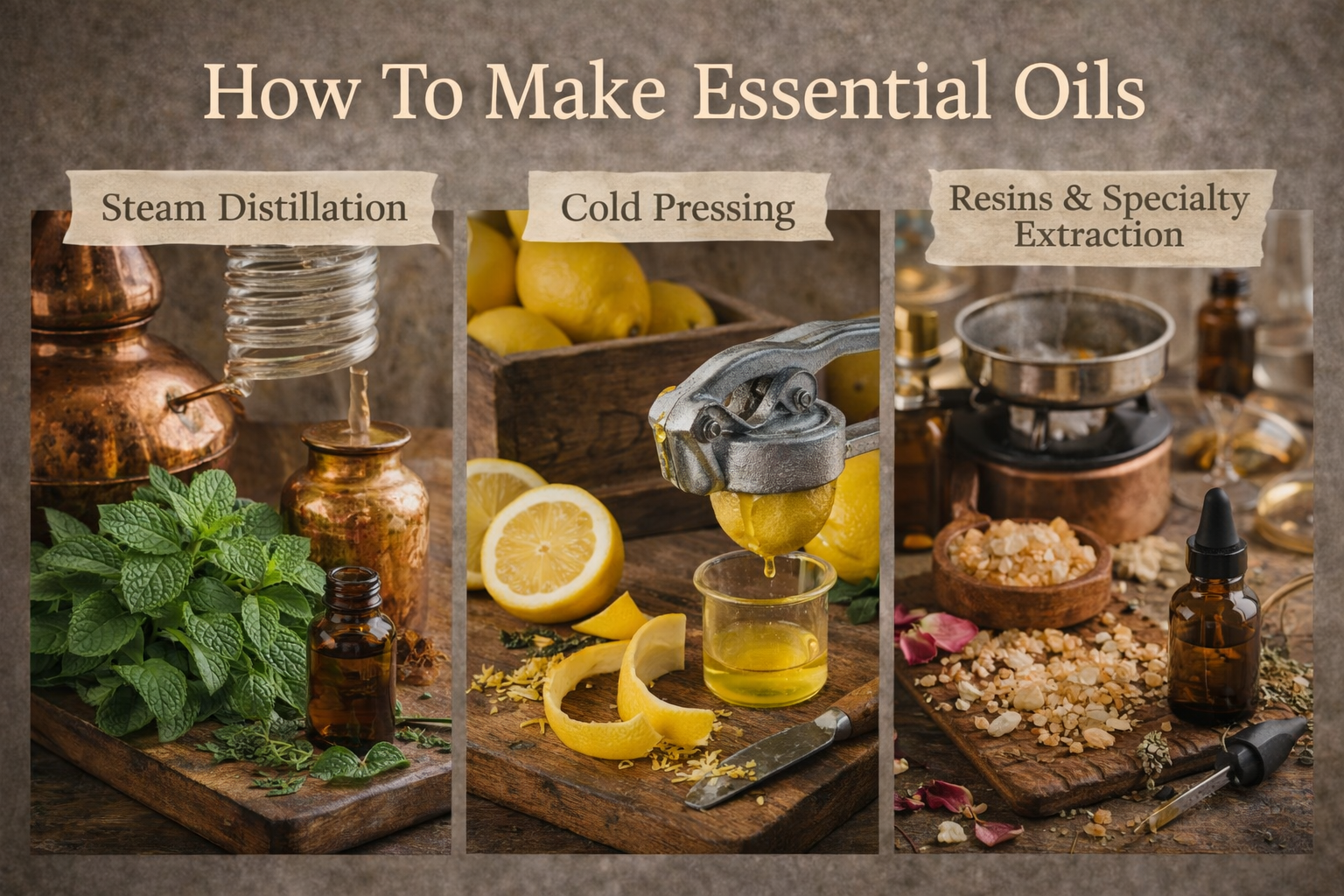
Essential oils are extracted using methods that help preserve the plant’s aromatic profile. The extraction method can influence the oil’s scent, strength, and final character.
Common for oils like lavender, peppermint, eucalyptus, and tea tree.
Often used for citrus oils like lemon to preserve a bright, fresh aroma.
Used for delicate botanicals, resins, or complex plant materials.
◇ Everyday Uses
What are essential oils used for?
There are many ways to use essential oils in daily life, from diffusing before bed to creating a refreshing home atmosphere or adding a botanical element to your self-care routine.
Aromatherapy
Diffuse oils to set a mood, support relaxation, or refresh a room.
Topical Use
Blend with carrier oils for massage, skincare, and body-care rituals.
Rituals & Relaxation
Use scent during meditation, sleep routines, bath rituals, or quiet moments.
Home & Lifestyle
Add natural fragrance to home-care routines and DIY cleaning blends.
Plant-Based Benefits
What are the main benefits of essential oils?
The benefits of essential oils vary by plant, but most fall into several key wellness categories: emotional support, relaxation, physical comfort, skin rituals, breathing support, focus, home care, and mindfulness.
1. Emotional Well-Being
Because scent is closely connected to memory and emotion, essential oils can be used as part of calming, uplifting, or grounding self-care routines.
- Promoting a calmer atmosphere during stress
- Supporting relaxation and bedtime routines
- Encouraging focus and mental clarity
- Creating a brighter, more uplifting environment
2. Relaxation and Sleep Rituals
Many people turn to essential oils as part of an evening routine. Oils like lavender, vetiver, and frankincense are often used to create a more peaceful transition into rest.
- Nighttime diffusion
- Post-bath relaxation
- Diluted massage blends
- Bedtime breathing rituals
3. Physical Comfort
Some essential oils are used in properly diluted body-care blends to bring cooling, warming, or soothing sensations during moments of tension or fatigue.
- Cooling or warming body-care blends
- Massage after activity
- Comforting neck, shoulder, or foot rituals
- Refreshing post-workout routines
4. Breathing and Seasonal Wellness Rituals
Crisp, refreshing oils such as eucalyptus, peppermint, rosemary, and tea tree are commonly diffused to refresh the air and support a clear, open-feeling atmosphere.
- Refreshing indoor air
- Steam inhalation rituals
- Seasonal diffuser blends
- Deep breathing moments
5. Skin and Beauty Rituals
When blended safely with carrier oils, essential oils can be part of a natural skincare ritual for clearer-looking, calmer-feeling, more balanced skin.
- Supporting clearer-looking skin
- Soothing the feeling of minor irritation
- Balancing oily or dry-feeling skin
- Enhancing natural skincare rituals
6. Focus, Home Care, and Mindfulness
Essential oils can also support workspaces, study sessions, home routines, and moments of presence. Bright oils like lemon, peppermint, and rosemary are often used for clarity, while grounding oils like vetiver and frankincense support quiet reflection.
- Work and study diffuser blends
- Natural air freshening
- DIY home-care blends
- Mindful self-care moments
Essential Oil Safety
Essential oils are powerful. Use them thoughtfully.
Essential oils are highly concentrated, so safety matters. Always dilute before topical use, patch test, and use extra caution around children, pets, pregnancy, nursing, medications, or sensitive skin.
☘ Dilute First
A common adult dilution is about 1–3%, or 6–18 drops per ounce of carrier oil.
✿ Patch Test
Test a small area before using a new oil or blend more broadly.
☀ Avoid Sensitive Areas
Keep oils away from eyes, inner ears, broken skin, and mucous membranes.
◇ Ask a Professional
Use caution around children, pets, pregnancy, nursing, medications, and medical conditions.
How to Use
Three simple ways to use essential oils.
Diffusing
A diffuser disperses aromatic oil molecules into the air, making it useful for mood, ambiance, and refreshing a room.
Topical Blends
When properly diluted with a carrier oil such as jojoba, almond, coconut, or grapeseed, oils can be used in massage, skincare, and body-care rituals.
Steam Inhalation
Add 1–2 drops to hot water and breathe gently. Use care, avoid eye irritation, and start with a small amount.
Botanical Oil Guide
Serene Tree Apothecary’s essential oils and how to use them.
Use this guide to choose oils by aroma, ritual, and intention. Always follow dilution and safety guidance before topical use.
Warm & Spicy
1. Cinnamon Leaf Essential Oil
Aroma: Warm, spicy, sweet
Plant Source: Cinnamomum verum leaf
- Seasonal diffuser blends
- Warm, spicy home aromas
- Energizing atmosphere
Use 1–2 drops in a diffuser blend. For topical use, dilute very carefully and avoid overuse.
Grounding & Floral
2. Clary Sage Essential Oil
Aroma: Herbal, smoky, slightly floral
Plant Source: Salvia sclarea
- Calming evening rituals
- Grounding diffuser blends
- Emotional tension routines
Diffuse 3–5 drops or blend with a carrier oil for abdominal or lower-back massage.
Bold & Spiced
3. Clove Bud Essential Oil
Aroma: Warm, spicy, intense
Plant Source: Syzygium aromaticum
- Seasonal home aromas
- Warm diffuser blends
- Spiced DIY blends
Clove is very strong. Use low amounts and dilute thoroughly to avoid irritation.
Fresh & Clearing
4. Eucalyptus Essential Oil
Aroma: Fresh, camphorous, minty
Plant Source: Eucalyptus globulus / radiata
- Refreshing indoor air
- Steam inhalation rituals
- Seasonal diffuser blends
Diffuse 3–5 drops or add 1–2 drops to hot water for careful steam inhalation.
Resinous & Grounding
5. Frankincense Essential Oil
Aroma: Warm, resinous, complex
Plant Source: Boswellia serrata
- Meditation and grounding
- Dry-skin rituals when diluted
- Calming diffuser blends
Diffuse 3–5 drops or mix with a carrier oil for face, chest, or pulse-point rituals.
Soft & Soothing
6. Lavender Essential Oil
Aroma: Floral, herbal, soothing
Plant Source: Lavandula angustifolia
- Sleep and relaxation rituals
- Calming skin-care blends
- Beginner-friendly aromatherapy
Diffuse before bed or dilute in lotion, carrier oil, or massage blends.
Bright & Citrusy
7. Lemon Essential Oil
Aroma: Bright, clean, citrusy
Plant Source: Citrus limon
- Morning diffuser blends
- Natural home freshening
- DIY cleaning aromas
Avoid topical use before sun exposure. Citrus oils can increase sun sensitivity.
Cool & Refreshing
8. Peppermint Essential Oil
Aroma: Cool, refreshing, minty
Plant Source: Mentha piperita
- Alertness and focus
- Cooling body-care blends
- Refreshing diffuser rituals
Avoid near eyes and use lower dilution around sensitive skin or children.
Herbal & Clear
9. Rosemary Essential Oil
Aroma: Herbaceous, fresh, slightly medicinal
Plant Source: Rosmarinus officinalis
- Work and study blends
- Scalp massage when diluted
- Fresh herbal diffuser blends
Pair with lemon and peppermint for a bright focus blend.
Fresh & Purifying
10. Tea Tree Essential Oil
Aroma: Fresh, medicinal, earthy
Plant Source: Melaleuca alternifolia
- Fresh indoor air
- Diluted blemish-area blends
- Purifying home routines
Do not ingest. Dilute before topical use and avoid overuse.
Deep & Grounding
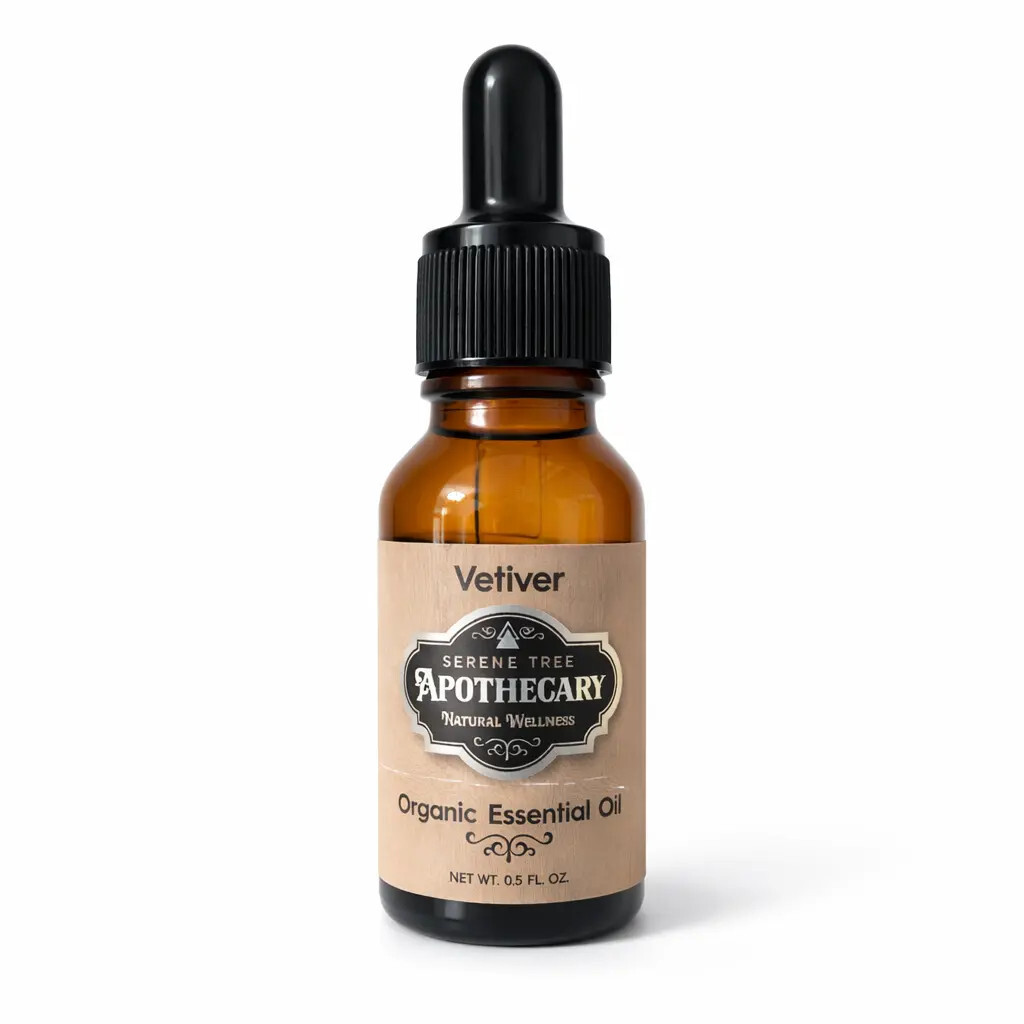
11. Vetiver Essential Oil
Aroma: Deep, earthy, grounding
Plant Source: Vetiveria zizanioides
- Evening grounding rituals
- Restful diffuser blends
- Meditation and relaxation
Diffuse in evening blends or dilute for feet and pulse-point rituals.
Sweet & Floral
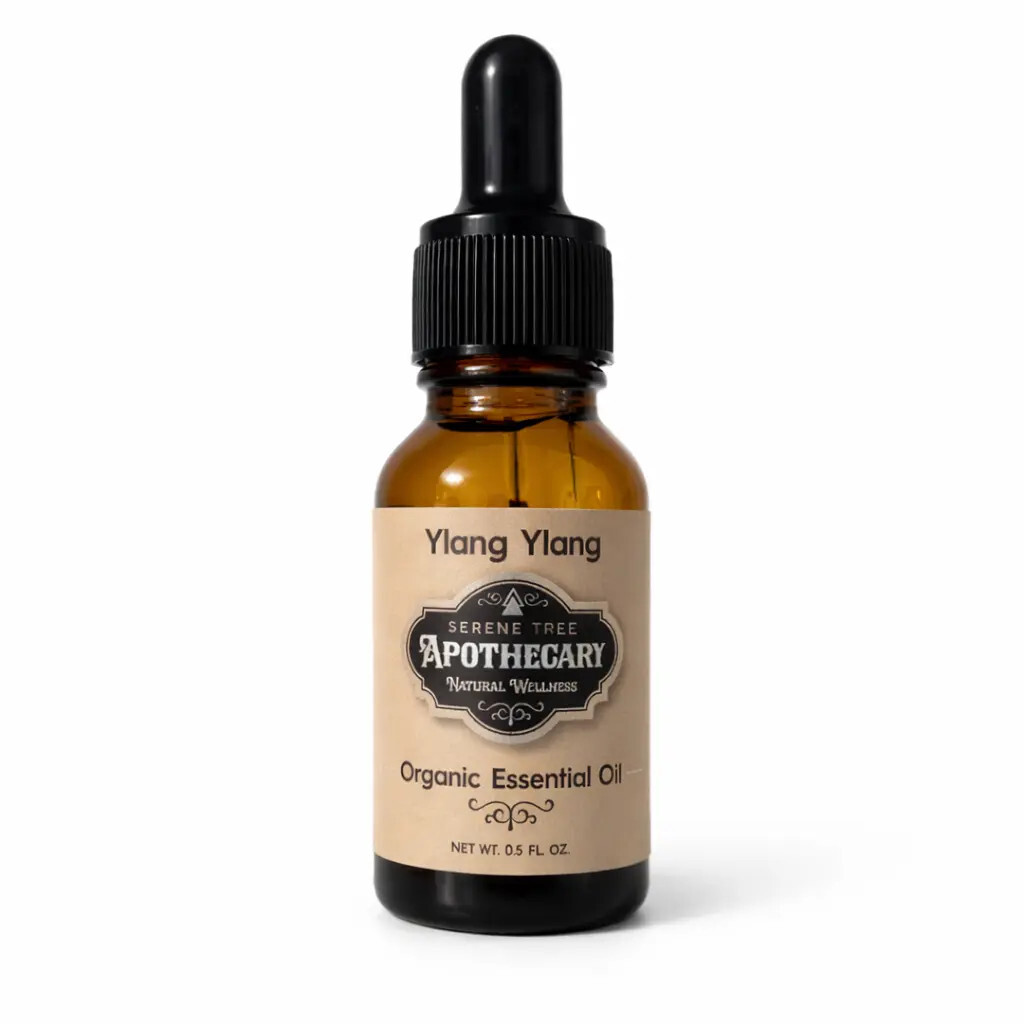
12. Ylang Ylang Essential Oil
Aroma: Sweet, floral, exotic
Plant Source: Cananga odorata
- Relaxing diffuser blends
- Massage rituals when diluted
- Soft floral body-care aromas
Diffuse 3–5 drops or blend with carrier oil for massage.
Blend Recipes
Essential oil blends to start with.
Use these as simple diffuser or topical blend ideas. Always dilute before topical application and adjust based on your diffuser size, room size, and personal sensitivity.
Dilution Basics
Carrier oils and why they matter.
Essential oils are concentrated, so carrier oils help dilute and deliver them to the skin more gently. Common carrier oils include jojoba, almond, coconut, and grapeseed.
Jojoba
Often loved for facial and body-care blends because it feels close to the skin’s natural oils.
Coconut Oil
A popular body-care carrier that feels smooth and familiar.
Almond Oil
A classic choice for massage and nourishing body-care rituals.
Grapeseed
A lightweight carrier for everyday topical blends.
Beginner Tips
Getting Started with Essential Oils
- Start with gentle, versatile oils like lavender, lemon, and frankincense.
- Use a diffuser in common areas to create a pleasant atmosphere.
- Create simple roller blends for daily support, always diluted with a carrier oil.
- Pair essential oils with self-care routines such as meditation, baths, stretching, and bedtime.
- Keep oils away from eyes, pets, and children unless you have confirmed specific safety guidance.
- Store essential oils in a cool, dark place with caps tightly closed.
Helpful Answers
Essential Oils Safety & Common Questions
Can I ingest essential oils?
Not without medical guidance. Essential oil ingestion should only be considered under the supervision of a qualified professional.
Are essential oils safe for kids?
Some essential oils may be used around children with caution and proper dilution, while others should be avoided. Always research child-specific safety guidance before use.
Can I apply essential oils directly to my skin?
Essential oils should generally be diluted with a carrier oil before topical use. Many oils are too concentrated to use directly on skin.
How long do essential oils last?
When stored in a cool, dark place with the cap tightly closed, many essential oils last 1–3 years depending on the oil type.
Start Your Aromatherapy Ritual
Choose the essential oils that fit your day.
From calming lavender to bright lemon, grounding vetiver, refreshing eucalyptus, and cozy spice oils, Serene Tree Apothecary offers essential oils for mindful routines, natural home care, and everyday self-care rituals.
```