
Posted by Marco Graham on Aug 18th 2026
Pine Needle Tea Benefits & Recipe
✿ Rooted in the Forest
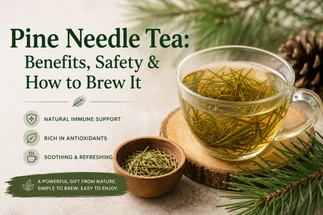
Pine Needle Tea: Benefits, Safety & How to Brew It
Pine needle tea is one of the oldest wild teas in the world, a clean, resinous, faintly citrus infusion made from the young needles of the pine tree. It is naturally caffeine‑free, traditionally valued as a source of vitamin C, and unlike almost every other tea on our shelves, it does not come from the tea plant at all.
What Is Pine Needle Tea?
Pine needle tea is a herbal infusion made by steeping the needles of a pine tree in hot water. Despite the name, it is not a true tea. Black, green, white and oolong all come from Camellia sinensis; pine needle tea comes from a conifer, which is why it contains no caffeine at all.
The needles are rich in aromatic resins and essential oils, and that is what you taste, a bright, evergreen, lightly citrus cup that is closer to a forest walk than to a teapot. It has been prepared for centuries across northern Europe, Korea, Japan and by Indigenous peoples across North America, most often as a warming winter drink.
Our own blend is made from organic white pine needles. White pine is the species most commonly used for tea, valued for its mild, sweet-resinous flavor and its gentleness compared with sharper, more astringent conifers.
✿ Why People Drink It
Pine Needle Tea Benefits
Pine needle tea has a long history of traditional use. The notes below describe how it has been used and enjoyed. They are not medical claims, and pine needle tea is not a treatment for any condition.
A traditional source of vitamin C
Conifer needles have long been used as a winter source of vitamin C, in places and seasons where fresh fruit was scarce. Younger, brighter needles are generally considered richer than older growth.
Naturally caffeine‑free
Because it is not made from the tea plant, pine needle tea contains no caffeine whatsoever. It is an easy choice late in the evening, or for anyone cutting caffeine out entirely.
A warming winter ritual
The steam carries the resinous aroma before you even taste it. In herbal traditions it has often been reached for in cold weather, as a comforting, clearing cup.
Plant compounds and aroma
The needles contain aromatic oils and polyphenols. These give the tea its distinctive evergreen character and are what most drinkers are really after.
✿ Read This First
Not Every Conifer Is Safe
This is the part most articles skip, and it matters more than any benefit on this page. If you are foraging your own needles, correct identification is essential. Several evergreens that look broadly pine‑like are not safe to drink.
Commonly used for tea
White pine, red pine and sugar pine. Spruce, balsam and Douglas fir needles are also traditionally infused. White pine is the usual choice for flavor.
Avoid entirely
Yew is highly toxic and is not a pine at all, though it is often mistaken for one. Norfolk Island pine is also considered unsafe, and most cedars and junipers should not be taken internally.
Avoid in pregnancy
Ponderosa and lodgepole pine contain isocupressic acid and are linked to miscarriage. If you are pregnant or breastfeeding, speak to your doctor or midwife before drinking any pine needle tea.
Buying a labeled, single‑ingredient tea removes the identification problem entirely. Ours is 100% organic white pine needles and nothing else.
✿ The Method
How to Make Pine Needle Tea
Pine needle tea is forgiving, but one rule matters: do not boil it. Hard boiling drives off the aromatic oils that give the cup its character and reduces the vitamin C. Hot water, off the boil, is what you want.
1. Scoop
1–2 teaspoons of needles per 8 oz cup. If you are using fresh needles, chop them roughly first to open up the surface.
2. Pour
Use hot water that is not boiling. Take the kettle off the heat and let it settle for a minute before pouring.
3. Steep
10–15 minutes, covered if you can. Pine needles are dense and slow to give up their flavor, so this is a longer steep than most teas.
4. Serve
Strain and drink warm. Honey or a squeeze of lemon suits it well; lemon in particular lifts the citrus note already in the needles.
What Does Pine Needle Tea Taste Like?
Clean, resinous and lightly citrus, with a faint sweetness underneath. People often expect it to taste like a cleaning product and are surprised by how soft it is, closer to a mild lemon-and-rosemary infusion than to a car air freshener.
White pine is the gentlest of the common conifers. Spruce is sharper and more citric, fir is sweeter and more balsamic. If pine needle tea is new to you, white pine is the sensible place to start.
Oversteeping makes it more resinous rather than bitter, so a long steep is safe. If a cup comes out stronger than you like, add hot water rather than starting again.
✿ Common Questions
Pine Needle Tea FAQ
Is pine needle tea good for you?
It is a caffeine-free herbal infusion that has been enjoyed for centuries and is traditionally valued as a source of vitamin C. It is a pleasant, low-risk drink for most healthy adults, but it is not a medicine and should not replace medical advice or treatment.
Does pine needle tea have caffeine?
No. It contains no caffeine at all, because it is not made from the tea plant. That makes it suitable for the evening and for anyone avoiding caffeine completely.
Can you drink pine needle tea while pregnant?
We would not recommend it without medical guidance. Some pine species, ponderosa and lodgepole in particular, contain compounds associated with miscarriage. If you are pregnant or breastfeeding, please speak to your doctor or midwife first.
How long should pine needle tea steep?
10–15 minutes in hot water that is not boiling. Needles are dense and release their flavor slowly, so a short steep tends to taste like warm water.
Is white pine needle tea a true white tea?
No, and this trips a lot of people up. White tea such as Silver Needle or White Peony comes from Camellia sinensis and contains caffeine. White pine needle tea is a herbal infusion from a conifer and contains none. The similar names are a coincidence.
Can I forage my own pine needles?
Only if you can identify the tree with complete confidence, and only from trees you know have not been sprayed. Yew is highly toxic and is regularly mistaken for pine. If there is any doubt at all, buy a labeled tea instead.
Try It For Yourself
Our White Pine Needle Tea is 100% organic white pine needles, packed fresh in small batches and never warehoused. Caffeine-free, plastic-free, and made to order.
A note on wellness claims. This article is for general information and describes traditional uses of pine needle tea. It is not medical advice and pine needle tea is not intended to diagnose, treat, cure or prevent any disease. If you are pregnant, breastfeeding, taking medication or managing a health condition, please speak to a qualified healthcare professional before adding any new herbal tea to your routine.