

Posted by Marco Graham on Oct 13th 2025
Types of Tea
☕ Serene Tree Apothecary Tea Guide
Types of Tea: A Complete Guide to Black, Green, White, Oolong & Herbal Tea
Tea is more than a beverage. It is a daily ritual, a sensory experience, and a simple way to match your cup to your mood. Explore the major types of tea, how they taste, how much caffeine they contain, how to brew them, and how to choose the best loose-leaf tea for your lifestyle.
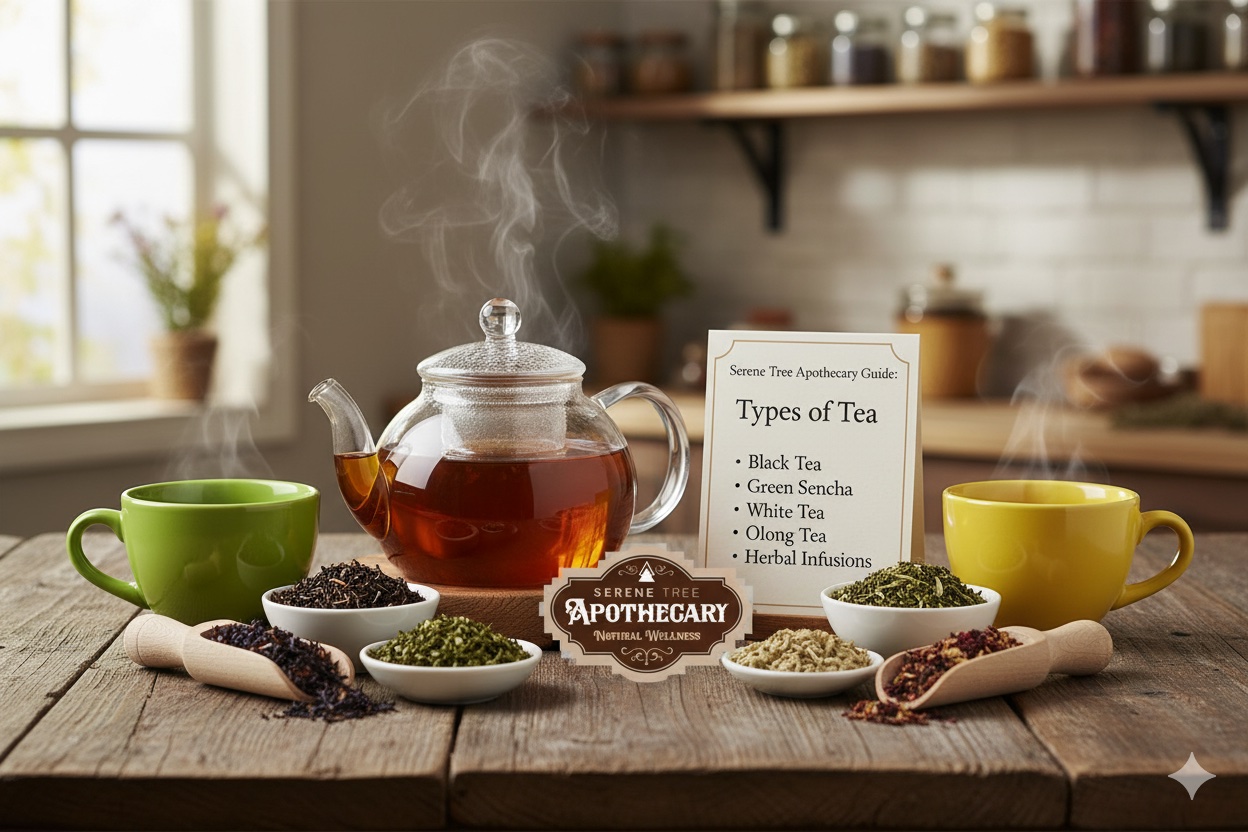
✿ Tea Basics
What Is Tea?
True tea comes from the Camellia sinensis plant. Black tea, green tea, white tea, and oolong tea all begin with the same plant, but they taste very different because of how the leaves are picked, withered, rolled, oxidized, dried, and blended. Herbal tea is different: it is made from herbs, flowers, roots, fruits, spices, and botanicals rather than traditional tea leaves.
True Teas
Black, green, white, and oolong teas all come from Camellia sinensis.
Herbal Teas
Herbal teas are botanical infusions and are usually naturally caffeine-free.
Oxidation Matters
Oxidation helps create the color, body, aroma, and flavor of each tea style.
Ritual & Wellness
Tea can support hydration, focus, calm, digestion-inspired routines, and mindful pauses.
Quick Comparison
Types of Tea Comparison Chart
Use this chart to compare tea types by processing, flavor, caffeine, and best time to drink.
| Tea Type | Processing | Flavor Profile | Caffeine | Best For |
|---|---|---|---|---|
| Green Tea | Minimally oxidized | Fresh, grassy, vegetal, earthy, bright | Low to moderate | Gentle energy, focus, morning or afternoon |
| Oolong Tea | Partially oxidized | Floral, roasted, fruity, honeyed, layered | Moderate | Flavor exploration, multiple steeps, mindful sipping |
| Black Tea | Fully oxidized | Malty, bold, brisk, full-bodied | Moderate to higher | Breakfast, milk tea, coffee alternative |
| White Tea | Lightly processed | Delicate, floral, soft, lightly fruity | Low to moderate | Gentle sipping, subtle flavor, afternoon calm |
| Herbal Tea | Botanical infusion | Floral, minty, fruity, spicy, earthy, sweet | Usually caffeine-free | Evening routines, caffeine-free sipping, botanical wellness |
Fresh & Bright
Green Tea
Green tea is made from unoxidized or minimally oxidized tea leaves. This helps preserve its fresh flavor, green color, and naturally occurring catechins. Depending on how it is processed, green tea can taste grassy, vegetal, nutty, earthy, marine, lightly sweet, or pleasantly roasted.
Many people choose green tea for gentle energy, calm focus, and a lighter caffeine experience than black tea or coffee.
Green Tea Benefits
Green tea naturally contains catechins, including EGCG, associated with antioxidant activity.
Green tea contains caffeine and L-theanine, a pairing many people enjoy for calm focus.
Unsweetened green tea can support healthy routines when used instead of sugary drinks.
Green tea can be part of a heart-conscious routine alongside balanced food, movement, and rest.
How to Make Green Tea
- Heat water: Use 160–185°F water. Avoid boiling water because high heat can make green tea taste bitter.
- Add tea leaves: Use 1 teaspoon of loose green tea per 8 oz cup.
- Steep: Pour water over the leaves and steep for 2–3 minutes.
- Strain: Remove leaves promptly to keep the cup smooth.
- Serve: Enjoy plain or with a squeeze of lemon.
Layered & Aromatic
Oolong Tea
Oolong tea is partially oxidized, sitting between green tea and black tea. It can be light and floral, creamy and buttery, honeyed and fruity, or dark and roasted depending on the level of oxidation and firing.
Oolong is a favorite for tea lovers who enjoy complexity because many oolongs can be re-steeped multiple times, with each infusion revealing a slightly different flavor.
Floral, roasted, creamy, fruity, honeyed, or full-bodied.
Milk oolong, Tieguanyin, peach oolong, and roasted oolong.
Mid-morning or afternoon for a flavorful, mindful cup.
Moderate, depending on oxidation and brewing style.
Oolong Tea Benefits
Oolong is often enjoyed in active lifestyle routines that include balanced food and movement.
Oolong contains caffeine and L-theanine, making it a flavorful focus tea.
Many tea drinkers enjoy oolong after meals as a warm, grounding cup.
Oolong offers one of the widest flavor ranges in the tea world.
How to Make Oolong Tea
- Heat water: Use 185–205°F water depending on the style.
- Add tea leaves: Use 1–2 teaspoons of loose oolong tea per 8 oz cup.
- Optional rinse: Briefly rinse tightly rolled leaves with hot water, then discard the rinse.
- Steep: Steep for 3–5 minutes.
- Re-steep: Many oolongs can be infused again with slightly longer steep times.
Bold & Classic
Black Tea
Black tea is fully oxidized, giving it a rich color, bold body, and brisk flavor. It is one of the most popular tea types in the world and is often used in breakfast blends, milk tea, chai, Earl Grey, and classic afternoon tea.
Because black tea is typically stronger than green or white tea, it is a favorite for mornings, coffee alternatives, and anyone who enjoys a hearty cup.
Malty, brisk, bold, strong, smooth, and full-bodied.
Morning, breakfast, midday, or milk tea moments.
Usually the highest among common true tea types.
Black Tea Benefits
Black tea offers a stronger caffeine experience than many green or white teas.
Black tea contains theaflavins and other polyphenols.
Many people enjoy black tea with breakfast or after meals.
The act of brewing and sipping tea can support a steady daily pause.
How to Make Black Tea
- Heat water: Use freshly drawn water around 200–212°F.
- Add tea leaves: Use 1 teaspoon of loose-leaf black tea per 8 oz cup.
- Steep: Steep for 3–5 minutes depending on desired strength.
- Strain: Remove leaves promptly to prevent bitterness.
- Serve: Enjoy plain or add milk, lemon, honey, or sugar to taste.
Delicate & Soft
White Tea
White tea is one of the least processed true teas. Young leaves and buds are typically picked, gently withered, and dried. The result is a soft, delicate cup with floral aroma, subtle fruit notes, and a naturally graceful feel.
White tea is a lovely choice when you want a gentler tea experience with a lighter body and softer flavor than black tea.
Floral, delicate, fruity, honeyed, soft, and subtle.
Silver Needle and White Peony.
Late morning, afternoon, or quiet moments.
Often lower, but caffeine varies by leaf and brew.
White Tea Benefits
White tea naturally contains polyphenols and catechins.
White tea is often loved in beauty routines for its light, refreshing character.
A soft tea option for those who prefer subtle flavor and lighter caffeine.
White tea encourages slower tasting because of its delicate character.
How to Make White Tea
- Heat water: Use 160–185°F water.
- Add tea leaves: Use 1–2 teaspoons of loose white tea per cup.
- Steep: Steep for 4–5 minutes.
- Strain: Remove leaves to avoid over-steeping.
- Serve: Enjoy plain to appreciate the delicate flavor.
Botanical & Caffeine-Free
Herbal Tea
Herbal tea is not technically true tea because it does not come from the Camellia sinensis plant. Instead, herbal teas are made from dried herbs, flowers, fruits, roots, spices, and botanicals. Many herbal teas are naturally caffeine-free, making them a popular choice for evening routines and caffeine-sensitive tea drinkers.
Herbal tea can be calming, refreshing, warming, fruity, floral, minty, or earthy depending on the ingredients.
Fruity, floral, minty, earthy, spicy, sweet, or tart.
Chamomile, peppermint, hibiscus, rooibos, ginger, turmeric, and white pine needle (see our pine needle tea guide).
Any time, especially evenings when you want caffeine-free sipping.
Usually caffeine-free unless blended with true tea.
Herbal Tea Benefits
Chamomile and lavender blends are often enjoyed as part of calming evening routines.
Peppermint, ginger, and fennel are popular after-meal tea ingredients.
Rosehips, echinacea, elderberry, and hibiscus are common in seasonal blends.
Unsweetened herbal tea can support daily hydration in a flavorful way.
How to Make Herbal Tea
- Heat water: Bring water to 200–212°F.
- Add herbs: Use 1–2 teaspoons of dried herbs, flowers, roots, spices, or fruits per cup.
- Steep: Steep for 5–10 minutes depending on the blend.
- Strain: Remove herbs or tea bag.
- Serve: Enjoy plain or add honey, lemon, or mint if desired.
Beyond the Basics
Other Tea Types Worth Knowing
Black, green, white, oolong, and herbal teas are the most familiar categories for many customers, but broader tea guides often include additional styles such as pu-erh, yellow tea, and rooibos.
Pu-erh Tea
Pu-erh is a fermented or post-fermented tea known for earthy, smooth, deep flavors. It is often enjoyed by tea drinkers who like rich, grounding cups.
Yellow Tea
Yellow tea is a rare true tea with gentle processing and a mellow, smooth, lightly sweet flavor profile.
Rooibos Tea
Rooibos is an herbal infusion from South Africa. It is naturally caffeine-free and often tastes smooth, earthy, sweet, and vanilla-like.
Tea Buying Guide
How to Choose the Best Tea for Your Mood
The best tea depends on when you drink it, how much caffeine you want, and what flavor profile you enjoy most.
For Morning Energy
Choose black tea, English Breakfast, Assam, Earl Grey, chai, or a bold green tea.
For Calm Focus
Choose green tea, matcha, white tea, or lighter oolong for smoother focus.
For Evening Calm
Choose chamomile, peppermint, rooibos, lavender, or other caffeine-free herbal blends.
For Flavor Exploration
Choose oolong, white tea, floral herbal blends, seasonal teas, or loose-leaf samplers.
Loose Leaf Quality
Loose Leaf Tea vs. Tea Bags
Loose leaf tea gives leaves, herbs, and botanicals more room to expand. That usually creates better aroma, smoother flavor, and a more customizable tea ritual.
Superior Taste & Aroma
Whole or larger leaves often create a fuller, more layered cup than tea dust or fannings.
More Brewing Control
Adjust tea amount, steep time, and strength to match your exact taste.
Reusable Tools
Use a basket infuser, teapot, strainer, or French press for a low-waste daily ritual.
Multiple Steeps
Many loose-leaf teas can be re-steeped, especially oolong, white, green, and some black teas.
Are There Any Downsides to Loose Leaf Tea?
Loose leaf tea requires an infuser, teapot, or strainer, and it takes slightly more time than dropping a bag into a mug. For many tea lovers, that extra step is part of the appeal: it turns tea into a slower, more intentional ritual.
Brewing Guide
Loose Leaf Tea Brewing Chart
| Tea Type | Water Temperature | Hot Tea Amount | Iced Tea Amount | Steep Time |
|---|---|---|---|---|
| Black Tea | 195–212°F | 1–1.5 tsp per 8 oz | 2–3 tsp per 8 oz | 3–5 minutes |
| Green Tea | 160–185°F | 1–1.5 tsp per 8 oz | 2–3 tsp per 8 oz | 2–3 minutes |
| Oolong Tea | 185–205°F | 1–1.5 tsp per 8 oz | 2–3 tsp per 8 oz | 3–5 minutes |
| White Tea | 160–185°F | 1–2 tsp per 8 oz | 2–4 tsp per 8 oz | 4–5 minutes |
| Herbal Tea | 200–212°F | 1.5–2 tsp per 8 oz | 3–4 tsp per 8 oz | 5–10 minutes |
Freshness Matters
How to Store Tea for the Best Flavor
Tea can lose aroma and flavor when exposed to light, heat, moisture, and strong smells. Proper storage helps protect your leaves and botanicals so every cup tastes fresher.
Use Airtight Containers
Keep tea sealed between uses to protect aroma.
Avoid Sunlight
Store tea in a dark cabinet or opaque container.
Keep It Dry
Moisture can quickly damage tea leaves, herbs, and flowers.
Separate from Odors
Tea can absorb nearby smells from coffee, spices, or pantry items.
Explore the Collection
Shop Tea by Type
Browse Serene Tree Apothecary teas by flavor, caffeine level, and daily ritual.
Green Tea
Fresh, bright, and gently energizing.
Shop Green TeaBlack Tea
Bold, malty, and breakfast-friendly.
Shop Black TeaWhite Tea
Delicate, floral, and softly sweet.
Shop White TeaOolong Tea
Layered, aromatic, and complex.
Shop Oolong TeaHerbal Tea
Caffeine-free botanicals for every mood.
Shop Herbal TeaHelpful Answers
FAQs About Types of Tea
What are the main types of tea?
The main tea types are black tea, green tea, white tea, oolong tea, and herbal tea. True teas come from Camellia sinensis, while herbal teas are botanical infusions.
Does tea contain more caffeine than coffee?
Brewed tea usually contains less caffeine than brewed coffee. Black tea tends to have the most caffeine among common tea types, while herbal tea is usually naturally caffeine-free.
Which tea is best for beginners?
Green tea is great for fresh flavor, black tea is great for bold flavor, and herbal tea is ideal if you want caffeine-free sipping. If you are new to tea, start with the flavor and caffeine level you already enjoy.
What tea is best for relaxation?
Chamomile, lavender, peppermint, and rooibos herbal teas are popular for caffeine-free relaxation routines. Green tea can also be calming for people who enjoy gentle caffeine and L-theanine.
How should I store tea?
Store tea in airtight, opaque containers away from light, heat, moisture, coffee, spices, and strong odors.
Does tea expire?
Dry tea does not usually expire like fresh food, but it can lose flavor, aroma, and color over time. Fresh, well-stored tea creates a better cup.
Start Your Tea Ritual
Find the tea that fits your mood, flavor, and daily routine.
From bold black teas and fresh green teas to delicate white teas, layered oolongs, and soothing herbal blends, Serene Tree Apothecary offers loose-leaf teas for every kind of cup.
```