

VIRGINIA FARM-BASED APOTHECARY BITTERS
What Is Blessed Thistle?
Blessed thistle is an annual thistle with spiny leaves and small yellow flower heads, grown in monastery physic gardens across medieval Europe and named for the reputation it earned there. The dried aerial parts — leaf, upper stem and flower — are what herbalists use. Its character comes from cnicin, an intensely bitter compound. Traditionally it has been taken as a bitter tea before meals, and it appears in many old nursing-mother formulas.
Meet Our Blessed Thistle
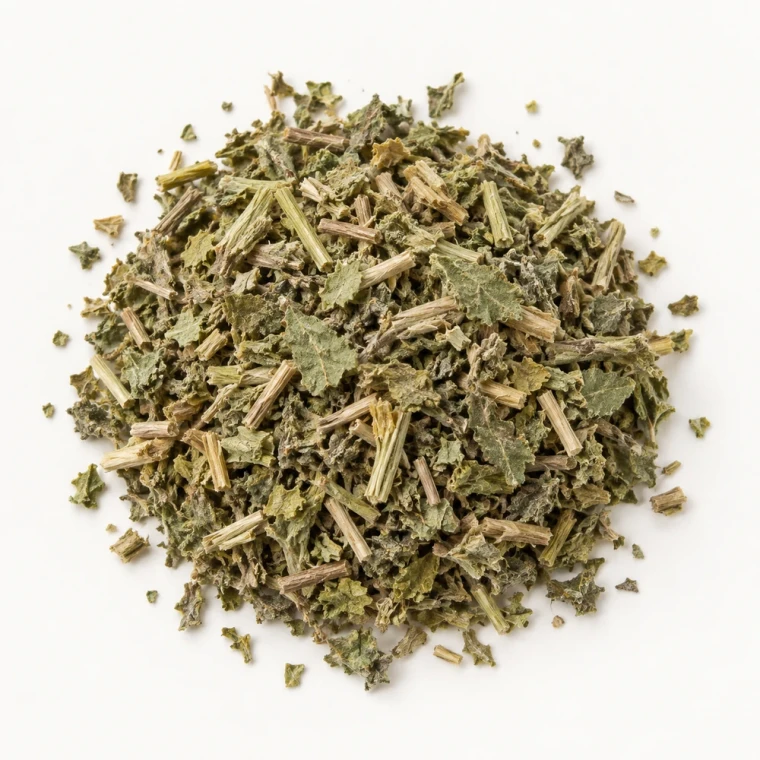
Ours is a dusty sage-green cut with pale stem pieces, ribbed leaf fragments and the occasional straw-colored flower bract. It is not a pretty herb and it does not pretend to be. Held close it smells dry and green, like cut hay with a sharp edge underneath. Touch a piece to your tongue and the bitterness arrives about two seconds later and stays a while.
Why You Should Not Sweeten It
Cnicin, the compound behind the bitterness, is water-soluble and comes out fast — most of it in the first three or four minutes. That gives you a dial. A quarter teaspoon steeped four minutes is brisk and drinkable; a heaping teaspoon steeped fifteen is punishing. Old-school bitters were always tasted rather than gulped, so herbalists sip them slowly and warm. Adding honey masks the very thing you steeped it for.
Taste, Texture & Aroma
Bracing. The cup brews a pale olive-gold and smells more like a hayfield than a tea, then the bitterness lands squarely mid-sip and spreads sideways across the tongue. There is no fruit and no perfume to hide behind. Steeped short it is tolerable straight; steeped long it wants a mint or a lemon herb alongside it. Most people drink it in small cups, warm.
Blending Blessed Thistle With Other Herbs
Blessed thistle rarely goes in a cup alone. The usual approach is to keep the bitterness and give it company: a mint to lift the top note, a soft herb to round the finish, or a fellow bitter to keep it honest.
- With Peppermint Leaf — the standard move. Peppermint's cool top note arrives first and the bitterness follows, which makes the cup far easier to finish.
- With Fennel Seed — the traditional partner in old nursing-mother teas, and its sweet anise edge is the one flavor that genuinely tames cnicin.
- With Nettle Leaf — deep, mineral and green. Nettle gives the blend body so the bitterness has something to sit on instead of hanging alone.
- With Oat Straw — oat straw is mild and faintly sweet, which softens the finish without covering the bitter opening you actually wanted.
- With Lemon Balm — a bright, lemony counterweight. Together they make a before-dinner cup that tastes intentional rather than merely medicinal.
- With Marshmallow Leaf — marshmallow's slippery texture rounds off the dry, scratchy edge that a long blessed thistle steep can leave behind.
Who Blessed Thistle Is Best For
Our Blessed Thistle is a good fit for:
- People who like a bitter before dinner and would rather have the plant than a bottled tincture.
- Nursing mothers working from a traditional formula — check with your midwife or provider first.
- Home blenders who need one genuinely bitter herb to anchor a digestive blend.
- Anyone rebuilding a monastery-garden shelf beside hyssop, rosemary and thyme.
- Cooks and bitters makers steeping their own aperitif-style infusions at home.
How To Use Blessed Thistle
Start small: a quarter to a half teaspoon per eight ounces. Pour water just off the boil over the herb, cover the cup, and steep four to six minutes — longer only if you want it fiercer. Strain well; the stem pieces are prickly. Most people drink one small cup about fifteen minutes before a meal. It also works cold, though cold does nothing to soften the bitterness.
Key Benefits & Everyday Uses: Blessed Thistle
Nothing here is a medical claim. This is how blessed thistle has been used traditionally — in monastery infirmaries, in old European household books, and in the bitter-tea habit that herbalists have carried forward for centuries.
- A classic digestive bitter — traditionally sipped warm a quarter hour before eating, in small cups rather than mugs.
- Old nursing-mother formulas — blessed thistle has appeared in European lactation teas for hundreds of years.
- An appetite herb by tradition — herbalists have long reached for bitters when someone has no interest in food.
- A monastery-garden herb — grown by Benedictine gardeners and written about in herbals since the 1500s.
- Homemade bitters and aperitifs — steeped in spirits by people who make their own before-dinner infusions.
- The bitter anchor in a blend — a small pinch changes the whole character of an otherwise mild tea.
Blessed Thistle Details
- Botanical name: Cnicus benedictus
- Plant part: Aerial parts (leaf, stem, flower)
- Cut: Cut & sifted
- Sizes: 0.5 oz and 1 oz
- Origin: Packed at our Virginia farm-based apothecary
- Contains: 100% blessed thistle. Nothing else.
Directions For Use
- Use 1/4 to 1/2 teaspoon per 8 oz of water, and start at the lower end.
- Steep covered 4-6 minutes in water just off the boil, then strain well.
- Sip warm, in small cups, about fifteen minutes before a meal.
- Do not use during pregnancy. Ask your provider before using it while nursing.
- Blend with peppermint or fennel if you want the bitterness softened.
Storage & Freshness
Keep it sealed, dry and away from light. Blessed thistle is not an aromatic herb, so it does not fade the way mint does — but damp will mat the leaf and dull the bitterness, which is the part worth protecting. Stored in a cool cupboard it holds well for a year or more.
Safety Notes & Warnings
Blessed thistle is a strong bitter with a few firm limits. Read this list before you brew it, especially if you are pregnant, allergic to the daisy family, or taking anything on prescription.
- Avoid during pregnancy. Blessed thistle is traditionally avoided by anyone pregnant or trying to conceive.
- Asteraceae allergy. If ragweed, daisies, chamomile, marigold or echinacea bother you, this one can too.
- Bitters wake up stomach acid by design. If you live with reflux, gastritis or an ulcer, go carefully or leave it alone.
- Large amounts can upset the stomach outright. More is not better with a bitter herb — a small cup is the traditional amount.
- If you are nursing, taking prescription medication, or managing a health condition, talk with your healthcare provider first.
- Not for children, and not a habit to keep up indefinitely — traditional use is short stretches, not year-round.
Our Virginia Farm-Based Apothecary Approach
Serene Tree Apothecary is a small Virginia farm-based apothecary. We buy our botanicals in small lots, taste and smell every batch before it goes on the shelf, and pack to order so what arrives is fragrant rather than dusty. Nothing here is a filler blend, a flavoring, or a mystery powder — it is one plant, cut and sifted, exactly as it appears on the label.
What Makes Our Blessed Thistle Different?
Bitter herbs are easy to sell badly. A lot of blessed thistle on the market is stemmy, gray and flat, because it was cut late and stored warm. We buy in small lots, look for green leaf rather than pale stalk, and taste a pinch before it goes on the shelf — if it tastes of nothing much, we pass on that lot. We keep to half-ounce and one-ounce sizes for the same reason.
Why Choose Serene Tree Apothecary Blessed Thistle?
Because we did not try to make blessed thistle sound pleasant. It is a bitter, and bitters earn their place by tasting like one — our job is to sell you a batch that still does. You get one plant and nothing else — no flavoring, no filler, no blend hiding behind a pretty name — cut and sifted at our small Virginia farm-based apothecary and packed to order in the size you choose.
Blessed Thistle FAQ
Why is blessed thistle so bitter?
Because of cnicin, a compound concentrated in the leaf and flower. It dissolves quickly in hot water, which is why a four-minute steep tastes very different from a fifteen-minute one. In the bitters tradition the taste is not a side effect — it is the reason people drink it.
Is blessed thistle the same as milk thistle?
No. Milk thistle is Silybum marianum and the seed is the part used; blessed thistle is Cnicus benedictus and you use the aerial parts. They are different plants with different traditions, even though old herbals sometimes muddle the names.
Can I drink it while pregnant?
No — blessed thistle is traditionally avoided during pregnancy and by anyone trying to conceive. If you are nursing and working from a traditional lactation recipe, talk it through with your midwife, lactation consultant or healthcare provider before you start.
How do I make it taste better?
Steep it shorter, use less, and pair it rather than sweeten it. Peppermint or lemon balm gives the cup a top note that arrives before the bitterness; fennel is the traditional softener. Honey works, but it buries exactly what you brewed the herb for.
How much should I use per cup?
A quarter teaspoon per eight ounces is a sensible start, and half a teaspoon is plenty for most people. Blessed thistle is one of the herbs where more genuinely is not better — a large amount is more likely to upset your stomach than anything else.
Why is it called blessed thistle?
It picked up the name in medieval Europe, where monks grew it in physic gardens and credited it with more or less everything. Cnicus benedictus carries the same idea, since benedictus means blessed. The reputation is historical, not a description of what the plant does.
Can I use it in homemade bitters?
Yes, and it is a good candidate. Steep a small amount in a neutral spirit for two to three weeks, shaking now and then, then strain it off. Use a light hand: blessed thistle will dominate a formula quickly if you let it.
What does the cut & sifted look like?
A dusty green mix of leaf fragments, thin pale stem and the odd straw-colored bract, sifted so most of the dust is gone. The stem pieces can be prickly, so strain carefully rather than drinking what settles in the bottom of the cup.