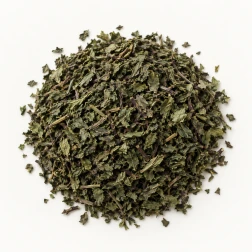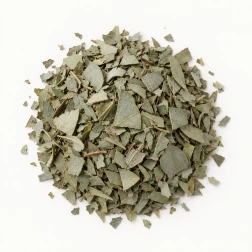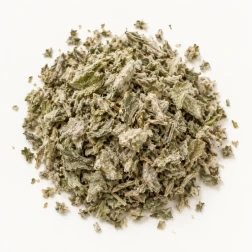

VIRGINIA FARM-BASED APOTHECARY HERBS
Marshmallow Leaf is the soft, gray-green leaf of Althaea officinalis, a tall mallow that has been grown in kitchen gardens since antiquity. It is one of the great slippery herbs — the leaf is full of mucilage, a plant polysaccharide that turns water faintly silky and thick. That slipperiness is the whole point, and cold water pulls it far better than boiling water does.
Cold Infusion FirstMucilage comes out best in cold water — steep overnight, not in a kettle.
Silky, Not SlimyA soft weight in the mouth rather than anything unpleasant.
Leaf, Not RootLighter and greener than marshmallow root, with a gentler slip.
Space Your MedicineMucilage coats — take medication an hour or two apart from it.
What Is Marshmallow Leaf?
Marshmallow is a tall perennial in the mallow family, with velvety leaves, pale pink flowers and a thick pale root. Every part of it is mucilaginous. This is the leaf, harvested through the growing season and dried, and it is the lighter, greener half of the plant — the root is denser and slipperier. Herbalists have reached for mallows for something like two thousand years, almost always for that slippery quality. The confection took its name from the root.
Meet Our Marshmallow Leaf
The cut is a soft, matte gray-green — the leaf dries paler than most herbs because of the fine down on its surface, so a spoonful looks almost dusty. There is very little smell, just a faint hay-and-green-bean note if you put your nose in it. Wet a pinch and roll it between finger and thumb, and the slip shows up within seconds. That is the mucilage saying hello.
Why Cold Water Beats Boiling
Mucilage is a long-chain polysaccharide that swells in water. It dissolves happily in cold water, while prolonged heat breaks it down and thins it — which is why marshmallow is one of the few herbs traditionally prepared cold. Put 1 to 2 tablespoons of leaf in a pint jar of cool water, cover it, and leave it four to eight hours; overnight in the refrigerator is easiest. Strain. The liquid should feel faintly thick, like water with body.
Mild, Silky & Green: Barely flavored at all — a whisper of green bean and cut hay, and no bitterness anywhere. What marshmallow brings is texture rather than taste: a soft weight in the water that coats the mouth and lingers a moment.
Taste, Texture & Aroma
Almost neutral, which is exactly why it blends so well. Cold infused, the liquid is pale straw, very slightly viscous, and glides rather than pours. Hot brewed, it comes out thinner and grassier — closer to an ordinary green herbal cup. Nothing about it is slimy in the unpleasant sense; the mouthfeel is nearer whole milk than okra. It takes lemon and honey easily.
Blending Marshmallow Leaf With Other Herbs
Marshmallow is a texture herb. It contributes body and softness and almost no flavor, which makes it the ideal partner for something loud. Blend it at a third to a half of the mix, and cold infuse the whole blend together.
- With Mullein Leaf — the traditional dry-throat pair. Marshmallow's slip smooths out mullein's fuzz, and both want thorough straining before you drink them.
- With Nettle Leaf — nettle's deep hay-green against marshmallow's silk. A classic overnight jar infusion, strained cold and sipped through the day.
- With Hibiscus Flowers — cold-brew them together and the tartness cuts the slip. Ruby colored, silky bodied, and very good poured over ice.
- With Peppermint Leaf — mint brings the flavor marshmallow doesn't have. Cold infuse both; hot water would thin the slip and blow off the mint's brightness.
- With Rose Hips — tart fruit and silky body. Cold infused overnight, it drinks like a soft, rosy lemonade with no sugar in it at all.
- With Oat Straw — two quiet, mild herbs that both reward a long steep. Together they make the most soothing plain-tasting jar in the cupboard.
Who Marshmallow Leaf Is Best For
Our Marshmallow Leaf is a good fit for:
- Cold-brew and jar-infusion people who already keep a pitcher going in the refrigerator.
- Singers, teachers and anyone who talks all day and likes something silky to sip.
- Blenders who need body — marshmallow gives a thin herbal mix a real mouthfeel.
- People who find marshmallow root too heavy and want the lighter, greener leaf.
- Anyone building a gentle, low-flavor base for stronger herbs to sit on top of.
How To Use Marshmallow Leaf
Cold infusion is the main event: 1 to 2 tablespoons per pint of cool water, covered, four to eight hours or overnight in the refrigerator, then strained. Shake the jar once or twice along the way. Drink within two days. If you want it warm, gently heat the strained infusion rather than brewing it hot. A quick hot cup works too — 1 teaspoon per 8 oz, 10 minutes — it is simply less silky.
⚠️ Space it away from medication. Marshmallow's mucilage coats the digestive tract and can slow the absorption of anything swallowed at the same time. Leave an hour or two between marshmallow and any prescription medication, and speak with your healthcare provider if you take something where timing or blood sugar matters.
Key Benefits & Everyday Uses: Marshmallow Leaf
Marshmallow's reputation rests on one physical property — slipperiness — and a very long record of household use. What follows is tradition only; nothing on this page is a treatment or a claim about your health.
- The classic demulcent tradition — mallows have been sipped for a dry, scratchy throat for two thousand years.
- Body in a blend — a spoonful gives a thin herbal tea a fuller, rounder mouthfeel.
- Cold-brew friendly — one of the few herbs that genuinely prefers a cold jar to a kettle.
- Very mild flavor — easy to drink daily, and easy to give to people who dislike herbal tea.
- Skin soaks and compresses — the cooled infusion has long been used as a softening rinse.
- Caffeine-free at any hour — there is nothing in it to interfere with an evening.
Marshmallow Leaf Details
- Botanical name: Althaea officinalis
- Plant part: Leaf
- Cut: Cut & sifted
- Sizes: 0.5 oz and 1 oz
- Origin: Packed at our Virginia farm-based apothecary
- Contains: 100% marshmallow leaf. Nothing else.
Directions For Use
- Cold infusion: 1–2 tablespoons per pint of cool water, covered, 4–8 hours or overnight.
- Strain well, refrigerate, and drink within two days.
- Hot cup: 1 teaspoon per 8 oz, steeped 10 minutes — thinner, but faster.
- Warm a cold infusion gently rather than boiling it, to keep the silky texture.
- Take prescription medication an hour or two away from marshmallow.
Storage & Freshness
Airtight container, cool and dark, and dry above all — mucilage attracts moisture, so a damp cupboard will clump the leaf and shorten its life. Keep the lid closed and don't store it beside the sink or stove. Dried leaf holds well for a year. The finished cold infusion is another matter: refrigerate it and drink it within two days.
Safety Notes & Warnings
Marshmallow leaf is about as gentle as herbs get, with one genuinely important caveat around timing and medication. Read that one even if you skip the rest.
- Separate it from medication by an hour or two. Mucilage can slow how quickly anything taken at the same time is absorbed, prescription drugs included.
- If you manage blood sugar with medication, talk with your provider — mallows have a traditional reputation for affecting how sugars are taken up.
- If you are pregnant or nursing, check with your healthcare provider before drinking it regularly.
- Drink cold infusions fresh and keep them refrigerated. A mucilage-rich liquid left warm on the counter spoils quickly.
- Anyone with a known allergy to plants in the mallow family should avoid it.
- Stop if it disagrees with you. Very slippery herbs can feel strange to some people the first time.
Our Virginia Farm-Based Apothecary Approach
Serene Tree Apothecary is a small Virginia farm-based apothecary. We buy our botanicals in small lots, taste and smell every batch before it goes on the shelf, and pack to order so what arrives is fragrant rather than dusty. Nothing here is a filler blend, a flavoring, or a mystery powder — it is one plant, cut and sifted, exactly as it appears on the label.
What Makes Our Marshmallow Leaf Different?
Marshmallow leaf is often sold as a coarse mix of stem and shredded leaf, and stem carries far less mucilage than leaf does — so a stemmy cut simply makes a thinner infusion. Ours is cut and sifted with the leaf kept high and the wood kept out. We buy in small lots, check the slip in a glass of cold water before anything goes on the shelf, and pack to order.
Why Choose Serene Tree Apothecary Marshmallow Leaf?
This is a quiet herb, and quiet herbs are the ones most often sold carelessly — nobody notices a weak batch of something that barely tastes of anything. We notice. You get one plant, cut and sifted, in a 0.5 oz size to try a jar or two, or 1 oz once you have decided cold infusions are your habit. Nothing added, nothing extended, packed to order.
These statements have not been evaluated by the Food and Drug Administration. This product is not intended to diagnose, treat, cure, or prevent any disease. Herbs are traditional foods and botanicals, not medicine. If you are pregnant, nursing, taking prescription medication, or managing a health condition, talk with your healthcare provider before using any herb.
Marshmallow Leaf FAQ
Why cold water instead of hot?
Because the mucilage is what you are after, and it dissolves readily in cold water while prolonged heat breaks it down. A cold infusion comes out noticeably silkier and slightly thick. Hot brewing still makes a pleasant, grassy cup — it simply doesn't have the same body.
How long should a cold infusion sit?
Four to eight hours covers it, and overnight in the refrigerator is the easiest version. Give the jar a shake once or twice. Past twelve hours you gain very little and start risking a sour note, especially if it sat out on the counter instead.
Should I buy the leaf or the root?
Root is denser, sweeter and considerably more slippery; leaf is lighter, greener and easier to drink daily. If you want maximum slip, root wins. If you want something mild enough to keep in a pitcher all summer, the leaf is the better buy.
Does it really affect medication?
It can affect the timing. Mucilage coats the gut wall and may slow how fast anything swallowed alongside it is absorbed. The fix is simple spacing — take medication an hour or two before or after. If timing is critical for your prescription, ask your provider first.
Is it related to marshmallow candy?
Historically, yes. The original confection was made from the sweet mucilage of marshmallow root, whipped with sugar and egg white. Modern marshmallows contain no plant at all — they are gelatin and corn syrup. This is the actual plant the candy was named after.
Will it taste slimy?
Not in the way people fear. It reads as body or weight rather than sliminess — the difference between whole milk and skim, not the texture of okra. If a very thick infusion bothers you, use less leaf or shorten the soak.
Can I drink it every day?
Plenty of people do, as a mild daily infusion; it is a gentle food-tradition herb. Keep the medication spacing in mind, keep the infusion refrigerated and fresh, and check with your healthcare provider if you are pregnant, nursing, or managing a health condition.
What blends best with marshmallow leaf?
Mullein Leaf is the traditional throat pairing, Nettle Leaf makes a mineral-rich overnight jar, and Peppermint Leaf supplies the flavor marshmallow lacks. For iced drinks, Hibiscus Flowers or Rose Hips add a tartness that plays beautifully against the silky texture.