

VIRGINIA FARM-BASED APOTHECARY HERBS
What Is Lemongrass?
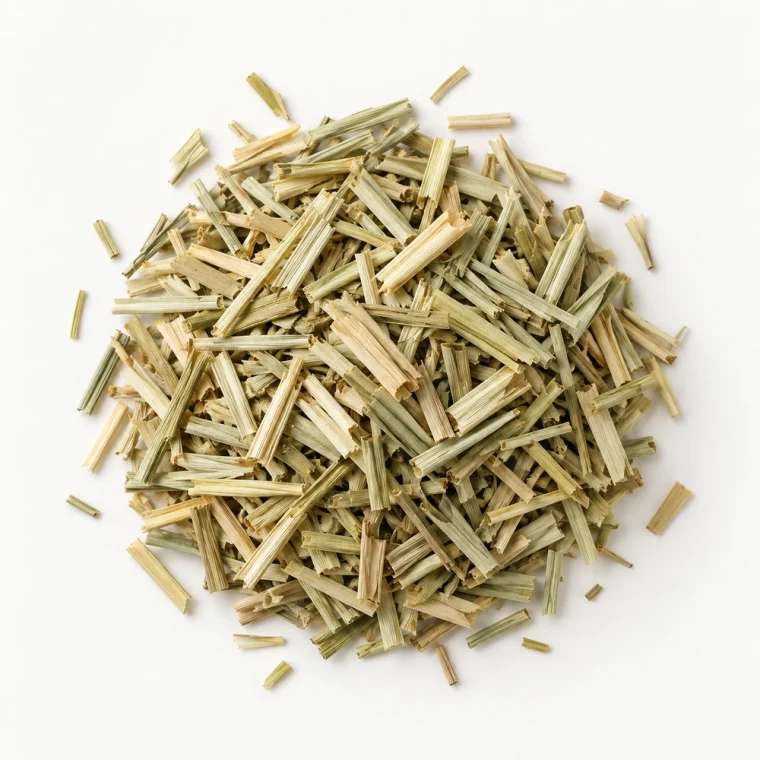
Lemongrass (Cymbopogon citratus) is a tall perennial grass grown across the tropics, forming dense clumps of blade-like leaves above a thick, pale base. This is the stalk and leaf, cut and sifted. Its lemon character comes from citral, the same aromatic compound found in lemon peel, which is why it smells like citrus yet carries no citric acid at all. Cooks across Southeast Asia have built soups, curries and pastes on it for centuries. Herbalists steep it plain, as an everyday tea. Steeped on its own, lemongrass tea is bright, citrusy and naturally caffeine-free, hot or iced.
Meet Our Lemongrass
Ours arrives as short straw-colored pieces, mostly split stalk with a few greener leaf shreds mixed through. The cut is coarse on purpose. Milled lemongrass turns to dust and loses its scent within weeks, so we leave it chunky and let you crush a piece yourself. Do that and you get a sharp, clean citrus lift with a faint sweetness behind it. The pieces feel dry, light and springy rather than brittle.
Why Lemongrass Wants A Longer Steep
Most tea herbs are leaves. Leaves are thin, and they surrender their flavor in three or four minutes. Lemongrass is a stalk, dense and fibrous and closer to a woody stem, so hot water has to work its way through. Give it a full eight to ten minutes, covered, with water at a hard rolling boil. The lid matters as much as the clock: citral is volatile, and an uncovered cup sends most of the aroma into the room instead of into the tea.
Taste, Texture & Aroma
Scent arrives first, bright citrus oil, like a lemon peel bent in half. The flavor follows soft and rounded, sweet at the edges, with a faint green hay note underneath from the leaf. There is no acidity in it, so it never puckers and never curdles milk. The liquor is pale gold and thin-bodied. Iced, it turns crisp and genuinely refreshing.
Blending Lemongrass With Other Herbs
Lemongrass is a finisher. It rarely carries a blend by itself, but a small pinch lifts heavy hay-flavored herbs and gives a flat cup a top note. Start at roughly one part lemongrass to three parts of everything else, then adjust.
- With Tulsi (Holy Basil) — tulsi brings a clove-and-pepper warmth that sits under the citrus rather than fighting it. A grounding, bright everyday cup, hot or iced.
- With Hibiscus Flowers — hibiscus supplies the tartness lemongrass lacks. Together they make a ruby iced tea that tastes finished without any sweetener.
- With Nettle Leaf — nettle tastes green and mineral, nearly like spinach broth. Lemongrass gives it a top note and makes a daily infusion easy to finish.
- With Peppermint Leaf — cool menthol over sharp citrus. A clean after-dinner cup that tastes far more considered than the two-minute effort it takes.
- With Spearmint Leaf — gentler than peppermint and sweeter on the finish. This is the summer pitcher blend: brew it strong, chill it, pour over plenty of ice.
- With Marshmallow Leaf — marshmallow brings a soft, slippery body and almost no flavor of its own. Lemongrass supplies the flavor, and the two balance neatly.
Who Lemongrass Is Best For
Our Lemongrass is a good fit for:
- Cooks who want lemon flavor in a broth, curry paste or marinade without adding acid to it.
- Iced tea drinkers — it brews strong, chills clean and does not go bitter in the refrigerator.
- Blenders looking for a reliable top note to lift grassy herbs like nettle leaf or oat straw.
- Anyone cutting back on caffeine who still wants a cup with real flavor in it.
- People new to loose herbs — lemongrass is forgiving, hard to over-steep and pleasant on its own.
How To Make Lemongrass Tea
Use one heaping teaspoon per eight ounces. Bring the water to a full boil, pour it over, cover the cup and steep eight to ten minutes; longer if you like it strong, since lemongrass does not turn bitter. Strain and drink hot, or double the herb, steep, and pour it over ice. For cooking, simmer a tablespoon in broth or coconut milk for twenty minutes, then strain the woody pieces out before serving.
Key Benefits & Everyday Uses: Lemongrass
Herbs are food and tradition, not medicine. What follows is simply how people have used lemongrass over the years, in kitchens and teapots and on hot afternoons. It is a record of custom, not a promise about what it will do for you.
- An everyday caffeine-free cup — lemongrass tea is drunk plain, all day, across much of Southeast Asia and the Caribbean.
- A traditional after-meal drink — many households pour it at the end of a heavy dinner rather than reaching for coffee.
- A kitchen workhorse — a foundation flavor in tom yum, curry pastes, coconut broths and grilled marinades.
- A warm-weather cooler — brewed strong and iced, it has long been a hot-climate refreshment.
- A blending herb — herbalists reach for it to make less palatable plants pleasant enough to actually drink.
- Simple home fragrance — the steam off a fresh pot is enjoyed for its clean citrus scent as much as the tea is.
Lemongrass Details
- Botanical name: Cymbopogon citratus
- Plant part: Stalk and leaf
- Cut: Cut & sifted
- Sizes: 0.5 oz and 1 oz
- Origin: Packed at our Virginia farm-based apothecary
- Contains: 100% lemongrass. Nothing else.
Directions For Use
- Use 1 heaping teaspoon per 8 oz of water.
- Pour water at a full rolling boil directly over the herb.
- Cover and steep 8 to 10 minutes; it will not turn bitter on you.
- Strain well. The stalk pieces stay woody and are unpleasant to chew.
- For iced tea, double the herb, steep, then pour over ice.
Storage & Freshness
Keep lemongrass dark, dry and cool, in a cupboard well away from the stove. Airtight matters more than anything else here, because the citrus oil is first to leave. Press the air out before you seal it. Stored properly it holds good aroma for a year or more; when a crushed piece no longer smells sharp, it is finished.
Safety Notes & Warnings
Lemongrass is eaten as a food across much of the world and most people tolerate it easily. A strong daily infusion is a different thing from a stalk simmered in soup, so a few notes are worth knowing first.
- Skip medicinal-strength lemongrass tea during pregnancy. Culinary amounts in food are traditionally considered fine; concentrated daily infusions are traditionally avoided.
- Nursing parents should check with a provider before drinking strong lemongrass tea every day.
- People allergic to grasses, the Poaceae family, may react to lemongrass. Start with a small cup.
- If you take prescription medication, particularly for blood sugar or blood pressure, talk with your provider first.
- Stop using it if you notice irritation in the mouth, throat or on the skin.
- Not intended as a daily drink for infants or young children.
Our Virginia Farm-Based Apothecary Approach
Serene Tree Apothecary is a small Virginia farm-based apothecary. We buy our botanicals in small lots, taste and smell every batch before it goes on the shelf, and pack to order so what arrives is fragrant rather than dusty. Nothing here is a filler blend, a flavoring, or a mystery powder — it is one plant, cut and sifted, exactly as it appears on the label.
What Makes Our Lemongrass Different?
We buy lemongrass in small lots and smell every batch before it goes out, because scent is the only honest test with this herb. Dull lemongrass looks exactly like fresh lemongrass. Ours is cut coarse rather than milled, so the oils stay where they belong until you crush a piece between your fingers. We pack to order instead of filling shelves months ahead. What you get is stalk and leaf, and nothing else.
Why Choose Serene Tree Apothecary Lemongrass?
You are buying from a small Virginia farm-based apothecary, not a warehouse. That means smaller lots, faster turnover and someone who actually smelled the batch before it shipped. Half an ounce is plenty to learn whether you like it; an ounce lasts a serious tea drinker a good while. One plant, cut and sifted, packed to order. If it ever turns up without that clean citrus snap, tell us.
Lemongrass FAQ
Does dried lemongrass taste like fresh lemongrass?
Close, but not identical. Drying softens the sharp green edge and concentrates the citrus, so dried lemongrass tastes a little sweeter and a little less grassy than a fresh stalk. For tea, the dried herb is arguably better. For a Thai curry paste, fresh still wins on texture.
Why is my lemongrass tea weak?
Almost always the steep. Lemongrass is a woody stalk, not a leaf, so it needs water at a full rolling boil plus eight to ten minutes under a lid. Three minutes in cooling water gets you very little. Try doubling the time before you double the herb.
Can I cook with this or is it only for tea?
Cook with it. Simmer a tablespoon in coconut milk, broth or a marinade for about twenty minutes, then strain the pieces out, because they stay woody no matter how long they cook. It works in curries, soups, poaching liquid and syrups for drinks.
Do I have to strain it?
Yes. The pieces are fibrous stalk and never soften, so they are unpleasant to chew. Use a basket infuser, a paper filter or a teapot with a screen. Straining lemongrass is easy, since the cut is coarse enough that nothing fine slips through.
Is lemongrass tea caffeine-free?
Completely. Lemongrass is a grass, entirely unrelated to the tea plant, and contains no caffeine whatsoever. That is a large part of why it is drunk all day in hot climates and poured after dinner in many households: flavor without a stimulant attached.
How many cups will an ounce make?
Roughly twenty-five to thirty cups from one ounce, and twelve to fifteen from a half ounce, at a heaping teaspoon per mug. If you brew iced tea by the pitcher you will move through it faster, since that method takes double the herb.
Can I drink lemongrass every day?
Plenty of people do, and it is eaten as a food across much of the world. Even so, a strong daily infusion is not the same as a stalk in a soup. If you are pregnant, nursing or taking prescription medication, ask your provider first.
Why does yours smell stronger than the grocery store kind?
Cut and turnover. We keep lemongrass coarse rather than milled, so the citrus oil stays sealed inside the pieces until you crush one, and we pack to order rather than holding stock for months. Ground herbs go flat within weeks of grinding.