

VIRGINIA FARM-BASED APOTHECARY HERBS
What Is Mugwort?
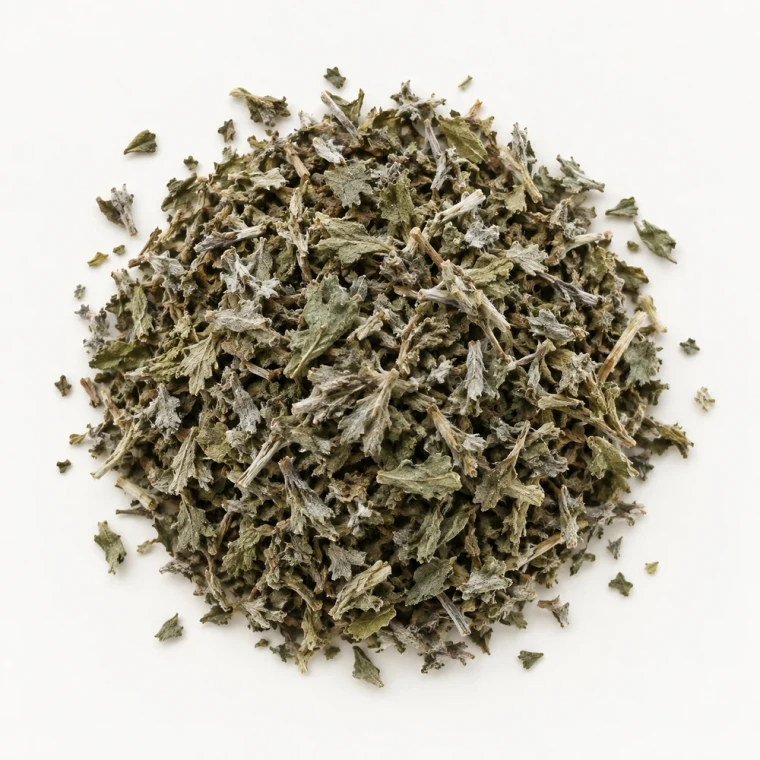
Mugwort is a hardy perennial in the aster family, related to wormwood and tarragon, growing waist-high along field edges with jagged green leaves that flash silver-white underneath. This is the dried leaf and flowering top. Before hops took over, mugwort bittered beer. It has been burned in bundles, tucked into pillows for vivid dreams, taken in small amounts as a digestive bitter before meals, and rolled into moxa. It carries thujone, so tradition has always kept the doses small. We pack our dried mugwort cut and sifted, so a little goes a long way in teas, dream pillows and herbal blends.
Meet Our Dried Mugwort
A dry, rustling cut in two tones — dull olive on one side of each flake, pale silver-gray on the other, with small buds and fine stem mixed through. Crush a pinch and the smell comes up sharp and herbal: sage, chrysanthemum leaf, a little camphor, something dusty and old underneath. It is not a pretty smell the way lavender is. It is a serious one, and it stays on your fingers.
Mugwort Is A Bitter, Not A Tea
Most people brew mugwort like a tea herb, get a mouthful of something like liquid sage, and never open the container again. Approach it as a bitter instead. Bitters work in small amounts — a quarter to half a teaspoon in a cup, or a splash of tincture on the tongue fifteen minutes before a meal, is the traditional dose. In a blend, keep mugwort to a fifth or less. The bitterness is the whole idea, not a flaw to drown in honey.
Taste, Texture & Aroma
Bitter first, aromatic second, and both last a while. Brewed alone at a full teaspoon it is frankly punishing — thin, green-gray liquor with a wormwood sharpness that coats the mouth. Brewed at a quarter teaspoon inside a blend it becomes something else entirely: a dry, savory backbone under sweeter herbs, the way bitters work in a drink. Honey does not fix it. Balance does.
Blending Mugwort With Other Herbs
Mugwort is not a solo act. It is the bitter corner of a blend — a fifth of the mix at most, often less — and its job is to give a soft, sweet tea some structure. Blend it, and it stops being difficult.
- With Peppermint Leaf — the simplest fix for mugwort's bitterness. Mint's sweetness lands on top and makes a one-fifth mugwort blend genuinely drinkable.
- With Lemon Balm — a traditional dream-tea pairing. Lemon balm's citrus softens the bitter edge without hiding the aromatic, sage-like side.
- With Passion Flower — hay-sweet and mild against mugwort's sharpness. A standard bedtime blend in which mugwort stays the smallest part by far.
- With California Poppy — both are quiet-evening herbs. One part mugwort to three makes a bitter-edged nightcap rather than a punishing cup.
- With Blessed Thistle — two honest bitters together, for people who actually want the bitterness. A small cup or a few drops of tincture before dinner.
- With Lavender Buds — for dream pillows and bundles rather than the teapot. Lavender's sweetness balances mugwort's dry, sage-like smoke.
Who Mugwort Is Best For
Our Mugwort is a good fit for:
- Dream-journal keepers who want the traditional herb for a pillow or a small evening cup.
- Bitters makers building a digestive tincture or a homemade amaro.
- Smoke bundle and incense makers — mugwort is the classic dry, silvery base.
- Experienced herb drinkers who already get along with wormwood, gentian and other honest bitters.
- Blenders who need a savory note in a lineup of sweet, soft herbs.
How To Make Mugwort Tea
Start smaller than feels right: ¼ to ½ teaspoon per 8 oz, water just off the boil, covered, steeped 5 to 10 minutes, then strained. Longer steeping gives you more bitterness, not more flavor. In a blend, keep it under a fifth of the total. For a dream pillow, use it dry with lavender in a muslin bag. For a bundle, tie the stems loosely and dry them fully before burning. Not for use in pregnancy or nursing.
Key Benefits & Everyday Uses: Mugwort
Mugwort's history is folklore, kitchen and craft as much as anything else. Everything below is traditional use, described as tradition. None of it is a medical claim, and none of it is advice about a health condition.
- The dream herb — pillows, sachets and small evening cups, a use recorded across many centuries and cultures.
- A traditional digestive bitter — a little before a meal, in the same family of habits as amari and aperitifs.
- Smoke bundles and incense — it dries silver, burns slowly, and smells of dry sage and hay.
- The pre-hops brewing herb — mugwort bittered ale for centuries before hops arrived in the brewhouse.
- A savory blending note — a small share gives structure to sweet, soft herbal mixes.
- Closet and drawer bundles — dried sprigs tucked among linens, an old and practical household habit.
Mugwort Details
- Botanical name: Artemisia vulgaris
- Plant part: Leaf and flowering top
- Cut: Cut & sifted
- Sizes: 0.5 oz and 1 oz
- Origin: Packed at our Virginia farm-based apothecary
- Contains: 100% mugwort. Nothing else.
Directions For Use
- Tea: ¼–½ teaspoon per 8 oz, water just off the boil, covered, 5–10 minutes, strained.
- Blend it — keep mugwort under a fifth of any mix.
- Dream pillow: mix dry with lavender buds in a small muslin bag.
- Bitters: steep in spirits for two weeks, shaking daily, then strain.
- Do not use in pregnancy or nursing, and do not drink it daily for long stretches.
Storage & Freshness
Airtight, cool, dark and dry. Mugwort holds its aroma better than most soft leaves because it is fairly resinous, but the bitter aromatic note still fades — a year is a fair working life. Store it away from anything mild, since the smell carries. If it stops smelling like sage and hay, it has gone flat.
Safety Notes & Warnings
Mugwort has more real cautions attached to it than most herbs on this shelf. None of them are exotic, but all of them matter. Please read this section before you brew anything.
- Avoid entirely in pregnancy and while nursing. Mugwort has a long traditional reputation as a uterine stimulant and is not used at any stage of pregnancy.
- Ragweed and daisy-family allergy. Mugwort is an Asteraceae plant and a significant pollen allergen; if ragweed, chamomile or chrysanthemum bother you, skip it.
- Mugwort cross-reacts with celery, carrot, birch pollen and certain spices in sensitive people. Start with a very small amount.
- It contains thujone. Keep amounts small and use it in short stretches rather than as a daily beverage herb.
- If you take sedatives or anticoagulants, or manage a seizure disorder, speak with your healthcare provider before using mugwort.
- Not for children. Keep smoke bundles away from anyone with breathing sensitivities, and never leave one burning unattended.
Our Virginia Farm-Based Apothecary Approach
Serene Tree Apothecary is a small Virginia farm-based apothecary. We buy our botanicals in small lots, taste and smell every batch before it goes on the shelf, and pack to order so what arrives is fragrant rather than dusty. Nothing here is a filler blend, a flavoring, or a mystery powder — it is one plant, cut and sifted, exactly as it appears on the label.
What Makes Our Mugwort Different?
Mugwort is easy to buy stemmy, because the plant is mostly stalk by weight and stalk is cheap. Ours is cut and sifted toward leaf and flowering top, which is where the aroma and the bitterness live — you can see the silver undersides right in the mix. We buy in small lots, crush a pinch from every one, and pack to order, so what you open smells sharp rather than like dust.
Why Choose Serene Tree Apothecary Mugwort?
We would rather you buy the 0.5 oz size of mugwort than the 1 oz, and we will say so plainly: this is an herb you use by the quarter teaspoon, and half an ounce goes a long way. What we can promise is a clean, aromatic cut, one plant and nothing else, and the cautions stated up front instead of buried. Packed to order, in the amount you will actually finish.
Mugwort FAQ
Why is mugwort called the dream herb?
Because of a very old and very widespread folk practice: a small cup before bed, or a handful of dried leaf in a pillow, said to make dreams more vivid and easier to recall. That is tradition rather than a proven effect, and it is why most people buy it.
Can I use mugwort while pregnant?
No. Avoid it completely during pregnancy, while trying to conceive, and while nursing. Mugwort carries a long-standing reputation as a uterine stimulant and is one of the herbs traditional practice puts firmly off-limits. If you are unsure, ask your healthcare provider before using it at all.
Why is it so bitter?
Sesquiterpene lactones — the same class of compounds that makes wormwood and gentian bitter. That bitterness is the point in the bitters tradition, where it is taken in drops before a meal. For a drinkable cup, cut the amount right down and blend it with something sweeter.
I react to ragweed. Can I use mugwort?
Probably not. Mugwort sits in the same family as ragweed, chamomile and chrysanthemum, and its pollen is a notable allergen in its own right. People sensitive to it sometimes react to celery, carrot and certain spices as well. Skip it, or check with an allergist first.
How much should I use in a cup?
A quarter to a half teaspoon per 8 oz is plenty, steeped five to ten minutes and strained. A full teaspoon is more than most people can finish. In a blend, keep mugwort to a fifth of the mix or less and let the other herbs carry the flavor.
Can I burn it as a smoke bundle?
Yes — that is one of its oldest uses. Tie the dried leaf and stem loosely, let it dry thoroughly, and burn a small amount in a heatproof dish with the room ventilated. Don't burn it around anyone with breathing sensitivities, and never leave it unattended.
Is mugwort the same as wormwood?
Close relatives, not the same plant. Wormwood is Artemisia absinthium — more bitter and higher in thujone. Mugwort is Artemisia vulgaris, bitter but comparatively gentler. They share a clear family resemblance in aroma, and neither belongs in large or daily doses.
What should I blend mugwort with?
Peppermint Leaf is the easiest fix for the bitterness and Lemon Balm the most pleasant. Passion Flower or California Poppy make a traditional evening blend. For dream pillows and bundles rather than cups, pair it with Lavender Buds instead.