

VIRGINIA FARM-BASED APOTHECARY HERBS
What Is Oregano?
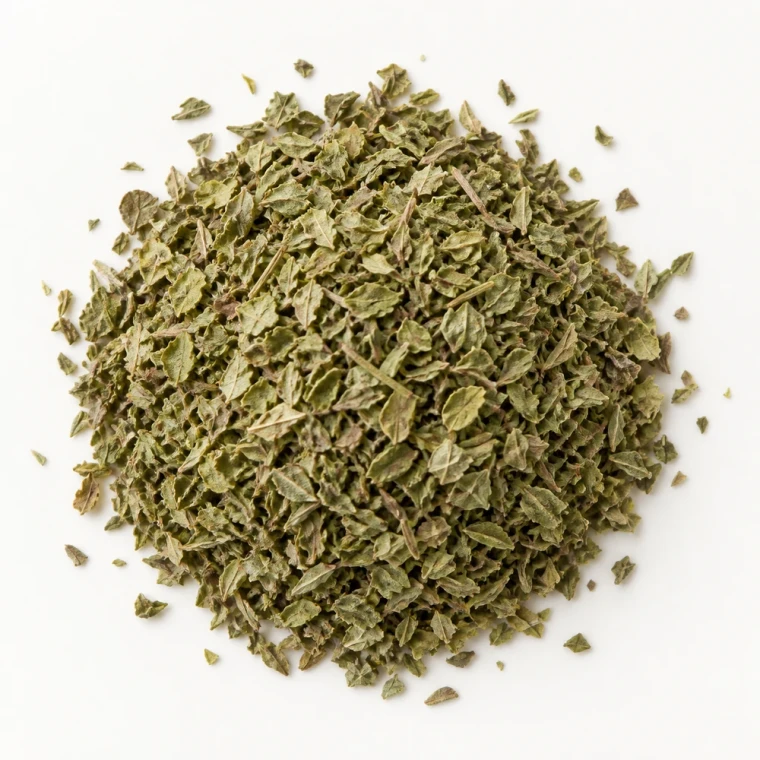
Oregano is a low, woody perennial in the mint family, native to the hills of the Mediterranean and long since naturalized across much of Europe and North America. This is the dried leaf, cut and sifted — stripped from the stem and broken small enough to sprinkle. It has been a kitchen herb for thousands of years and a household herb alongside that, turning up in cooking, in vinegar infusions and in steam bowls in roughly equal measure.
Meet Our Oregano
What you open is gray-green and leafy rather than powdered — small flat pieces you can still recognize as leaf, with the stem sifted out. The smell arrives before the bag is fully open: warm, peppery, a little camphor, a little sweetness underneath. Rub a pinch between your palms and it gets noticeably stronger, which is the whole trick with dried oregano. Packed to order in 0.5 oz and 1 oz.
Dried Oregano Is Stronger Than Fresh
Most herbs lose their punch when they dry. Oregano is one of the few that concentrates instead: drying drives off the water and leaves the aromatic oils behind, so by volume the dried leaf runs roughly three times as strong as fresh. The working conversion is one teaspoon dried for one tablespoon fresh. The other difference is timing. Fresh oregano goes in at the end of cooking; dried oregano wants heat and time, so add it early and let it simmer.
Taste, Texture & Aroma
Bite a flake dry and you get pepper first, then a slow bitterness, then a cooling camphor finish that settles at the back of the tongue. In food it rounds out and turns savory. As a tea it is bracing and genuinely bitter, so most people take it short-steeped and well diluted, or with honey and lemon, rather than straight. The aroma is warm, dry and unmistakable.
Blending Oregano With Other Herbs
Oregano is loud. In cooking it wants partners that can hold a line; over a steam bowl or in a vinegar jar it works best cut with something softer. Either way, use less oregano than you think and let the other herb set the tone.
- With Thyme — the classic kitchen pairing. Equal parts make an all-purpose Mediterranean rub for chicken, beans, roasted vegetables and tomato sauce.
- With Rosemary — rosemary's pine against oregano's pepper. Crush both together for roast potatoes, focaccia and lamb, and go light on the rosemary.
- With Eucalyptus Leaf — for a steam bowl only, never the pot. Oregano's camphor note sits naturally beside eucalyptus over hot water.
- With Hyssop Herb — two sharp, aromatic mint-family herbs. A pinch of each in a winter vinegar makes a bracing, savory base for a shrub.
- With Peppermint Leaf — a little peppermint cools oregano's bitterness in a steam blend and makes it far easier to breathe over.
- With Marshmallow Leaf — if you do want oregano as a tea, marshmallow rounds the edges off. Keep it to one part oregano to four.
Who Oregano Is Best For
Our Oregano is a good fit for:
- Home cooks who want real leaf oregano, not the gray dust at the bottom of a supermarket jar.
- Anyone mixing their own spice blends — Italian seasoning, taco mix, dry rubs, chimichurri.
- People who keep an herbal vinegar or oxymel jar going through the winter.
- Anyone building a steam-bowl shelf and wanting one sharp, resinous herb in the mix.
- Cooks who would rather buy small and use it fast than store a pound that quietly fades.
How To Use Oregano
In cooking, use 1 teaspoon dried for every tablespoon of fresh, and add it early so it can simmer. Crush it between your palms on the way in — the warmth releases the oil. For a vinegar, pack 2 tablespoons into a half-pint jar, cover with warm cider vinegar and steep two weeks. For a steam, use a teaspoon in a bowl of hot water under a towel. As a tea, steep 1 teaspoon for 5 minutes, no longer.
Key Benefits & Everyday Uses: Oregano
Traditional uses, not medical claims. Oregano has been a kitchen and household herb around the Mediterranean for thousands of years, and it is one of the few herbs people reach for as often for dinner as for the steam bowl.
- A workhorse culinary herb — tomato sauce, beans, roasted vegetables, grilled meat, pizza, dressings and dry rubs all take it well.
- Traditionally used in steam — a teaspoon in a bowl of hot water is an old household habit through cold, damp months.
- An herbal vinegar staple — oregano gives its character up to vinegar readily and has long been used that way in Mediterranean kitchens.
- Strong aroma, small amounts — a half ounce goes a remarkably long way, which makes it cheap to keep genuinely fresh.
- A traditional winter herb — herbalists have reached for oregano through the cold season for generations.
- Blends and keeps well — it is the backbone of homemade Italian seasoning and most Mediterranean rubs.
Oregano Details
- Botanical name: Origanum vulgare
- Plant part: Leaf
- Cut: Cut & sifted
- Sizes: 0.5 oz and 1 oz
- Origin: Packed at our Virginia farm-based apothecary
- Contains: 100% oregano. Nothing else.
Directions For Use
- Cooking: use 1 teaspoon dried for every 1 tablespoon fresh.
- Crush a pinch between your palms before it goes in — the warmth wakes the oil up.
- Add it early in the cook rather than at the end; dried oregano needs simmering time.
- For vinegar, cover 2 tablespoons with warm cider vinegar and steep two weeks, shaking daily.
- Keep to culinary amounts in pregnancy — no strong medicinal teas and no oregano oil.
Storage & Freshness
Keep oregano in a sealed jar in a dark cupboard, well away from the stove — heat and steam are what kill dried herbs, not time alone. Whole leaf holds far longer than ground. Expect a good year of real aroma. When crushing a pinch no longer fills your hand with smell, the jar has done its work.
Safety Notes & Warnings
Oregano behaves as a food at kitchen strength and as something rather different in concentrated form. These notes cover both. If you are managing a health condition or taking medication, talk with your provider first.
- Mint-family allergy: oregano is a Lamiaceae herb, related to thyme, marjoram, basil and mint. Avoid it if you react to any of those.
- Pregnancy: culinary amounts are food. Avoid large medicinal doses, strong teas and oregano oil.
- Oregano oil is not dried leaf. It is a concentrated product, should never be swallowed undiluted, and is not what you are buying here.
- If you take a blood thinner or have surgery scheduled, keep oregano to cooking amounts and ask your provider before using concentrated preparations.
- Large amounts can irritate the stomach. If oregano tea feels harsh going down, dilute it or stop.
- Cooking amounts are fine for children; medicinal doses are not, and should not be given without a pediatric provider.
Our Virginia Farm-Based Apothecary Approach
Serene Tree Apothecary is a small Virginia farm-based apothecary. We buy our botanicals in small lots, taste and smell every batch before it goes on the shelf, and pack to order so what arrives is fragrant rather than dusty. Nothing here is a filler blend, a flavoring, or a mystery powder — it is one plant, cut and sifted, exactly as it appears on the label.
What Makes Our Oregano Different?
Supermarket oregano is usually old, over-milled and half stem. We buy in small lots, sift the stem out, and keep the cut coarse enough that you can still see leaf rather than powder. Then we check it the only way that really matters: crush a pinch and smell it. If it does not fill the room, it does not go on the shelf. Packed to order in 0.5 oz and 1 oz.
Why Choose Serene Tree Apothecary Oregano?
We are a small Virginia farm-based apothecary, and this is one plant, cut and sifted, with nothing added and nothing extended. Dried oregano fades — that is the honest truth about it — so the useful thing we can do is sell it in sizes you will actually finish. A 0.5 oz is a season of cooking. A 1 oz is a year. Both are packed the week they ship.
Oregano FAQ
How much dried oregano equals fresh oregano?
Use one teaspoon of dried for every tablespoon of fresh — a ratio of roughly one to three. Oregano is unusual in that drying concentrates it rather than weakening it, so measuring fresh-for-dried by eye will overshoot badly and make the dish taste medicinal.
When should I add dried oregano to a dish?
Early. Dried oregano needs heat and time to release its oils, so it belongs in the sauce at the start of the simmer rather than sprinkled on at the end. Crush the pinch between your palms first — the warmth and friction wake it up noticeably.
Is oregano the same as marjoram?
They are close cousins in the same genus but not the same herb. Oregano is peppery, bitter and resinous; sweet marjoram is milder, softer and slightly floral. You can substitute one for the other in a pinch, but expect the dish to change character rather than simply weaken.
Can you make tea with dried oregano?
You can, and people traditionally have, but it is a bracing and genuinely bitter cup. Steep one teaspoon for about five minutes, no longer, and take it with honey and lemon or blended with a softer herb like Marshmallow Leaf. Most people prefer it as a steam.
Is dried oregano safe during pregnancy?
Culinary amounts — what you would put in a pot of sauce — are treated as food. Concentrated forms are a different question, and strong medicinal teas and oregano oil are traditionally avoided in pregnancy. Talk with your provider before using anything beyond cooking quantities.
Is this the same as oregano oil?
No. This is the plain dried leaf, cut and sifted. Oregano oil is a concentrated extract, dramatically stronger, sold by the drop, and it carries its own cautions. The two are not interchangeable and the dosing advice for one does not transfer to the other.
How long does dried oregano stay good?
About a year of real aroma if it is sealed in glass, kept dark and kept away from the stove. It does not spoil after that, it simply goes quiet. The test is simple: crush a pinch in your palm, and if the smell does not rise up at you, replace it.
What is the difference between Mediterranean and Mexican oregano?
They are not even in the same plant family. This is Mediterranean oregano, Origanum vulgare, a mint-family herb that is peppery and resinous. Mexican oregano is Lippia graveolens, a verbena-family plant with a more citrus, slightly grassy character better suited to chili and salsa.