VIRGINIA FARM-BASED APOTHECARY HERBS
Mullein Leaf is the soft, flannel-textured leaf of Verbascum thapsus, the tall roadside biennial that has been a steam-and-tea herb in American folk practice for generations. It brews pale gold and tastes of very little — faintly hay-sweet, with no bite at all. The one thing mullein asks of you is a fine strain, because the leaf hairs will scratch a throat.
Strain It FineTiny leaf hairs need cloth or a coffee filter, not a wide basket.
Almost No FlavorPale and hay-sweet. It blends into anything without taking over.
A Steam HerbLong used in a bowl of hot water with a towel over the head.
Cut & SiftedLoose leaf in 0.5 oz and 1 oz, packed to order.
What Is Mullein Leaf?
Mullein is a tall biennial in the figwort family. In its first year it makes a low rosette of thick, pale-green leaves covered in velvety hairs; in its second it sends up a single flowering spike that can pass six feet. This is the leaf, cut and sifted. Herbalists across Appalachia and Europe have dried it for tea and for steam inhalation, and it remains one of the oldest herbs in the American home apothecary.
Meet Our Mullein Leaf
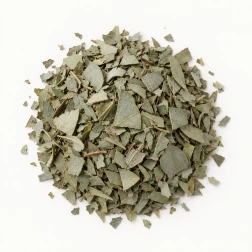
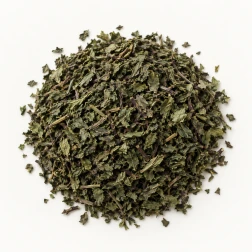
Open the bag and you get soft, dusty sage-green flakes with a paler underside, cut small enough to measure by the spoon but nowhere near powder. Rub a piece between your fingers and it still feels faintly fuzzy — that is the hair layer that gives mullein its texture. The smell is quiet: dry hay, a little green, nothing sharp. Packed to order in 0.5 oz and 1 oz.
Why Mullein Has To Be Strained
Every mullein leaf is coated in branched hairs so small you barely see them, and they float free in hot water. Swallowed, they prickle the back of the throat and set off exactly the tickle most people brew mullein to avoid. A wide-hole tea basket will not catch them. Pour the finished tea through a coffee filter, a fine unbleached cloth, or a very fine mesh strainer, then hold the cup to the light: it should read clear, not hazy with drifting fibers.
Soft, Hay-Sweet & Neutral: Barely there, in the best way. Mullein brews a light straw-gold with a faint sweetness like dry meadow hay, and it carries no bitterness, no astringency and no aftertaste — which is why it holds other herbs so easily.
Taste, Texture & Aroma
Mullein is the quietest herb on our shelf. The liquor is pale gold, thin-bodied, and slightly slippery on the tongue from the mucilage in the leaf. The flavor reads as warm hay with a whisper of sweetness; there is nothing bitter to push against and no heat or chill at all. The dry aroma is faint dried grass. Steeped long, it deepens in color far more than in taste.
Blending Mullein Leaf With Other Herbs
Mullein is a base, not a headline. Because it brings body and almost no flavor of its own, it lets a sharper herb sit on top without a fight. Most steam blends and quiet evening cups start here and build outward.
- With Marshmallow Leaf — two soft, slippery leaves together. Equal parts make a smooth, coating cup with almost no flavor of its own, easy to drink all evening.
- With Thyme — thyme brings the sharp aromatic edge mullein lacks. A pinch is plenty, and it turns a neutral base into a proper cold-season steam blend.
- With Peppermint Leaf — menthol lifts the whole cup and gives mullein a clean finish. Three parts mullein to one part peppermint is a good starting ratio.
- With Eucalyptus Leaf — for the steam bowl, not the teapot. Mullein softens eucalyptus, which is bracing on its own over hot water.
- With Elderflower — elderflower's honeyed floral note sits right on top of mullein's hay. A gentle, old-fashioned cup for a cold evening.
- With Hyssop Herb — hyssop is minty and faintly bitter. Against mullein's neutrality it reads clean rather than harsh. Use one part to four.
Who Mullein Leaf Is Best For
Our Mullein Leaf is a good fit for:
- Anyone building a steam bowl and cold-season tea shelf from single herbs instead of pre-made blends.
- Tea drinkers who want a neutral base herb that stretches stronger botanicals without muddying them.
- People who prefer a cup with no bitterness and no caffeine, late in the evening.
- Herbalists who keep traditional Appalachian herbs on hand and want the loose leaf, not a capsule.
- Beginners who want one plant, cut and sifted, in a size they can actually finish.
How To Make Mullein Tea
Use 1 to 2 teaspoons per 8 oz of just-boiled water. Cover and steep 10 to 15 minutes — mullein is slow to give up its body. Then strain twice: once through the basket, once through a coffee filter or fine cloth. Drink it plain or with honey. For more blends and straining tips, read our full guide on how to make mullein tea. For a steam, put a tablespoon in a bowl of hot water, drape a towel over your head and breathe for five minutes with your eyes closed.
Key Benefits & Everyday Uses: Mullein Leaf
None of this is a medical claim — it is simply what people have long done with the leaf. Mullein has been in household use across Appalachia and Europe for centuries, and these are the reasons it stayed on the shelf.
- A traditional cold-season herb — folk herbalists have reached for mullein tea and mullein steam through damp winter months for generations.
- Soft and mucilaginous — the leaf carries a gentle, slippery quality that people describe as coating and comforting in a warm cup.
- Mild enough for daily drinking — no caffeine, no bitterness and nothing stimulating, which is why it is so often taken in the evening.
- A carrier for stronger herbs — its neutrality makes it the standard base in homemade steam and tea blends.
- Long used in steam inhalation — a bowl, hot water and a towel is one of the oldest household uses of this leaf.
- An easy herb to keep — dried mullein stores well and stays useful in the cupboard through a full season.
Mullein Leaf Details
- Botanical name: Verbascum thapsus
- Plant part: Leaf
- Cut: Cut & sifted
- Sizes: 0.5 oz and 1 oz
- Origin: Packed at our Virginia farm-based apothecary
- Contains: 100% mullein leaf. Nothing else.
Directions For Use
- Measure 1-2 teaspoons of cut & sifted mullein leaf per 8 oz cup.
- Cover with just-boiled water and steep 10-15 minutes with the lid on.
- Strain through a coffee filter or fine cloth — a wide basket lets the leaf hairs through.
- Sweeten with honey if you like, or blend with a sharper herb.
- For steam, add a tablespoon to a bowl of hot water and breathe under a towel.
Storage & Freshness
Keep mullein in a sealed glass jar away from light, heat and the steam of the stove; a dark cupboard is ideal. Dried leaf holds its character best in the first year, and after that it is still usable but flatter. If the flakes lose their pale green and turn gray-brown, start a fresh bag.
Safety Notes & Warnings
Mullein has a long and gentle track record, but no herb suits everyone. Read these before you brew, and talk with your own healthcare provider if you are managing a condition or taking medication.
- Always strain finely. The leaf hairs can irritate the mouth and throat if they end up in the cup.
- Mullein sits in the figwort family. If you have reacted to related plants, start with a small amount and see how you do.
- If you are pregnant or nursing, talk with your provider before drinking mullein regularly.
- Mullein is not well studied for long-term daily use in children. Check with a pediatric provider first.
- Steam is hot. Keep the bowl on a stable surface, keep your face well back from the water, and keep children away from it.
- If you take prescription medication or manage a chronic condition, check with your healthcare provider before adding any new herb.
Our Virginia Farm-Based Apothecary Approach
Serene Tree Apothecary is a small Virginia farm-based apothecary. We buy our botanicals in small lots, taste and smell every batch before it goes on the shelf, and pack to order so what arrives is fragrant rather than dusty. Nothing here is a filler blend, a flavoring, or a mystery powder — it is one plant, cut and sifted, exactly as it appears on the label.
What Makes Our Mullein Leaf Different?
We buy mullein in small lots and open every one before it goes on the shelf. What we look for is color and softness — pale sage-green flakes that still feel faintly velvety, rather than the gray dust that comes of sitting too long in a warehouse. We sift the coarse stem out so you are measuring leaf, not stalk, then pack to order in 0.5 oz and 1 oz.
Why Choose Serene Tree Apothecary Mullein Leaf?
We are a small Virginia farm-based apothecary, and this is one plant in a bag — cut, sifted, nothing added. The 0.5 oz is a real size: enough to brew mullein a dozen times and decide whether you like it, without a pound of leaf going flat in your pantry. If you want more, the 1 oz is there. We would rather you finish it than store it.
These statements have not been evaluated by the Food and Drug Administration. This product is not intended to diagnose, treat, cure, or prevent any disease. Herbs are traditional foods and botanicals, not medicine. If you are pregnant, nursing, taking prescription medication, or managing a health condition, talk with your healthcare provider before using any herb.
Mullein Leaf FAQ
Do I really have to strain mullein tea?
Yes. The leaf is covered in fine hairs that come loose in hot water and prickle the throat. Strain the brewed tea through a coffee filter, a fine cloth or a very fine mesh sieve. A standard wide-hole tea basket will not catch them.
What does mullein leaf taste like?
Almost nothing, which is the point. It brews a pale gold cup that tastes faintly of dry hay with a touch of sweetness, no bitterness and no aftertaste. Its texture is slightly slippery. That neutrality is why it is used as a base for other herbs.
How much mullein leaf do I use per cup?
One to two teaspoons of cut & sifted leaf per 8 oz of just-boiled water. Cover the cup and steep 10 to 15 minutes, since mullein is slow to release. A 0.5 oz bag gives you roughly a dozen good cups depending on how strong you brew.
Can I use mullein leaf as a steam instead of a tea?
Yes, and it is one of the oldest ways people have used it. Put about a tablespoon in a bowl, pour hot water over it, drape a towel over your head and breathe for a few minutes with your eyes closed. Keep your face well back from the water.
Is mullein leaf caffeine free?
It is. Mullein contains no caffeine at all, which is why it is a common evening herb. It is also one of the few herbs with almost no stimulating or bitter character, so most people find it easy to drink late without it affecting sleep.
What is the difference between mullein leaf and mullein flower?
They come from the same plant but are not interchangeable. The leaf is the soft, hairy foliage used for tea and steam, and is what we sell here. The flower is the small yellow bloom from the second-year spike, harvested in far smaller quantities and traditionally infused in oil.
How long does dried mullein leaf keep?
Sealed in glass, kept dark and dry, it holds its character well for about a year. Mullein fades in color before it fades in usefulness. If the flakes have gone gray-brown and smell dusty rather than like dry hay, it is time to replace the bag.
What herbs blend well with mullein leaf?
Because it is so neutral, almost anything. Marshmallow Leaf for a soft, coating cup; Thyme or Hyssop Herb for a sharper cold-season blend; Peppermint Leaf for lift; Eucalyptus Leaf for the steam bowl. Mullein usually makes up half or more of the mix.