
VIRGINIA APOTHECARY · EXTERNAL USE ONLY
Comfrey Leaf is the broad, bristly leaf of Symphytum officinale, a deep-rooted plant that has grown beside barns and kitchen gardens for centuries. This is an external-use-only herb: comfrey contains pyrrolizidine alkaloids, so it is never taken internally. Ours is cut and sifted for compresses, poultices, infused oils, salves and soaking baths on unbroken skin.
External Use OnlyNever brewed, never swallowed — comfrey goes on skin, not in a cup.
Compress & PoulticeSoftens fast in hot water into a green mash that holds heat against skin.
Salve-Maker's LeafThe classic base for slow-infused oils, balms and after-the-garden salves.
Cut & SiftedSmall green flakes and fine stem, ready to weigh, wrap or infuse.
What Is Comfrey Leaf?
Comfrey is a hardy perennial in the borage family, with hairy leaves and a thick black taproot that pushes several feet down. The leaf is harvested through the growing season and dried. Home herbalists have used it for generations as an outward remedy — laid on as a poultice, steeped into a compress, or infused into oil for salves. Because the plant contains pyrrolizidine alkaloids, modern practice keeps comfrey strictly external, on unbroken skin.
Meet Our Comfrey Leaf
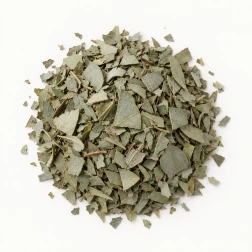
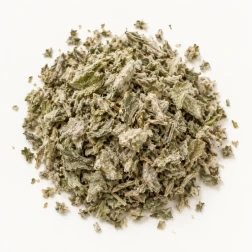
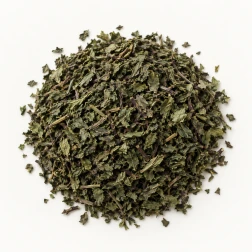
What you open is a soft green-gray flake, cut and sifted small enough to pack into a muslin bag or a jar of oil without wrestling with it. The color runs from olive to a duller sage, with pale ribs of midvein mixed through. The smell is faint and green — cucumber and cut hay, more vegetable than perfume. Rub a pinch and you can still feel the fine bristle the fresh leaf is known for.
Why Comfrey Stays On The Skin
Comfrey's pyrrolizidine alkaloids are processed by the liver, which is why every careful source now keeps the plant topical-only — no tea, no tincture, no capsules. Two working rules follow from that. Use it on unbroken skin only; tradition is firm that comfrey does not belong on a deep, dirty or open wound. And use it in short stretches — a few days on, then a rest — rather than daily for weeks.
Green, Cool & Vegetal: Comfrey smells the way a cucumber vine smells after rain — cool, green, faintly sweet, with hay underneath. In hot water it turns slippery and dark, closer to steamed greens than to tea. Handle it dry and it is simply soft and dusty.
Taste, Texture & Aroma
This is the one herb on our shelf we will not describe by the cup: comfrey is not tasted, not sipped, not swallowed. What you notice instead is the aroma — cool cucumber and cut hay — and the texture. Wetted, the leaf goes soft and slick within a minute, holding water and warmth against the skin the way a wrung-out cloth does.
Blending Comfrey Leaf With Other Herbs
Comfrey blends the way a base note does: it carries the bulk and the slip, and the other botanicals bring scent and color. Every pairing below is for the outside of the body — oils, salves, compresses and bath bags, never a cup.
- With Calendula Flowers — the classic salve pair. Infuse both in oil for six weeks and you get a gold-green balm for dry, weathered hands.
- With Arnica Flowers — both strictly external. Steeped together into a compress, they make the traditional after-the-garden soak for tired, overworked legs.
- With Lavender Buds — lavender gives the scent comfrey lacks. A handful of each in a muslin bag turns a hot bath into something worth sitting in.
- With Rosemary — resinous and bracing against comfrey's flat green. Together they make a warming foot-and-leg soak, or a brisk infused oil after a long walk.
- With Marshmallow Leaf — two slippery leaves. Mixed into a warm poultice they hold moisture longer than either alone, which keeps a compress from drying out mid-use.
Who Comfrey Leaf Is Best For
Our Comfrey Leaf is a good fit for:
- Salve and balm makers who want a dependable oil-infusion base rather than a finished product.
- Gardeners and hands-on workers who reach for a compress at the end of a long day outdoors.
- Anyone building an external-use kit alongside arnica, calendula and plantain.
- Bath and soak people who would rather have a muslin bag of green herbs than a bottle of bubbles.
- Herb students who want to learn a traditional plant properly, with its limits understood.
How To Use Comfrey Leaf
External use only — do not drink it. For a compress, pour just-boiled water over 2 tablespoons of leaf, cover ten minutes, let it cool to comfortable, then soak a cloth and lay it on unbroken skin for fifteen to twenty minutes. For infused oil, fill a jar two-thirds with dry leaf, cover with olive oil, and set it somewhere warm for four to six weeks before straining. For a bath, tie a small handful in muslin under running water.
⚠️ External use only. Comfrey contains pyrrolizidine alkaloids and must never be taken internally — no tea, no infusion, no tincture, no capsules. Use on unbroken skin only, for short periods, and not during pregnancy or nursing. Keep it away from children and pets.
Key Benefits & Everyday Uses: Comfrey Leaf
None of this is medical advice, and comfrey is not a treatment for anything. What follows is simply how the plant has traditionally been used on the outside of the body, and what people reach for it for.
- A traditional compress herb — laid on warm over tired, overworked muscles at the end of a physical day.
- Salve and balm base — one of the oldest oil-infusion leaves in the home apothecary.
- Bath and foot soaks — a handful in muslin turns plain hot water into a green, softening soak.
- Slip and body in a poultice — the mucilage helps a mash hold together and stay damp against the skin.
- Dry, weathered skin — gardeners have long finished the day with a comfrey-infused balm on their hands.
- A teaching plant — a clear, memorable lesson in why some herbs belong on the outside only.
Comfrey Leaf Details
- Botanical name: Symphytum officinale
- Plant part: Leaf
- Cut: Cut & sifted
- Sizes: 0.5 oz and 1 oz
- Origin: Packed at our Virginia farm-based apothecary
- Contains: 100% comfrey leaf. Nothing else.
Directions For Use
- External use only — never brew, drink or swallow comfrey in any form.
- Apply to unbroken skin only; keep it off open, deep or dirty wounds.
- Compress: steep 2 tablespoons in just-boiled water, cool, soak a cloth, apply 15–20 minutes.
- Infused oil: cover dry leaf with olive oil, steep 4–6 weeks in a warm spot, then strain.
- Use in short stretches — a few days at a time, then a break — and patch test first.
Storage & Freshness
Keep comfrey in an airtight container somewhere cool, dark and dry. Light fades the green and moisture is the real enemy; leaf that clumps has taken on damp. Stored well, cut and sifted comfrey holds its character for about a year. Store it apart from your tea herbs so it never ends up in a cup by mistake.
Safety Notes & Warnings
Comfrey is the clearest example of an herb with a hard line around it. Read this section before you use it, and treat these limits as rules rather than suggestions.
- External use only. Comfrey contains pyrrolizidine alkaloids, which are toxic to the liver when taken internally. Never make it into tea, infusion, tincture or capsules.
- Unbroken skin only. Do not apply to open, deep or dirty wounds, and stop at once if any irritation appears.
- Not for use in pregnancy or while nursing, and not for infants or young children.
- Use for limited periods — short stretches with breaks between, rather than continuous daily use over large areas of skin.
- Avoid if you have liver disease or take medication that affects the liver; speak with your healthcare provider first.
- Keep out of reach of children and pets, and store it well away from the herbs you drink.
Our Virginia Farm-Based Apothecary Approach
Serene Tree Apothecary is a small Virginia farm-based apothecary. We buy our botanicals in small lots, taste and smell every batch before it goes on the shelf, and pack to order so what arrives is fragrant rather than dusty. Nothing here is a filler blend, a flavoring, or a mystery powder — it is one plant, cut and sifted, exactly as it appears on the label.
What Makes Our Comfrey Leaf Different?
Plenty of comfrey on the market is powder-fine, half stem, or so old the green has gone to brown. Ours is cut and sifted to a workable flake — small enough for a muslin bag, large enough to strain cleanly out of an oil. We buy in small lots, smell every batch, and pack to order, so the leaf still reads green and cucumber-cool when it reaches you.
Why Choose Serene Tree Apothecary Comfrey Leaf?
We sell comfrey the way we would hand it to a neighbor: with the external-use rule said out loud, more than once. You get one plant, cut and sifted, in a 0.5 oz size for a first salve or a 1 oz size if you infuse oil by the jarful. No filler, no flavoring, and no vagueness about what it is or how far it goes.
These statements have not been evaluated by the Food and Drug Administration. This product is not intended to diagnose, treat, cure, or prevent any disease. Herbs are traditional foods and botanicals, not medicine. If you are pregnant, nursing, taking prescription medication, or managing a health condition, talk with your healthcare provider before using any herb.
Comfrey Leaf FAQ
Can I drink comfrey tea?
No. Comfrey is external use only. It contains pyrrolizidine alkaloids that are processed by the liver, and internal use is not considered safe at any dose. You will find no tea, infusion, tincture or capsule recipe on this page for exactly that reason — please don't improvise one.
Is comfrey the same as knitbone?
Yes. Knitbone, bruisewort and slippery root are all old folk names for Symphytum officinale. Be careful with “boneset,” though — that name properly belongs to a different plant, Eupatorium perfoliatum. What you have here is comfrey leaf, cut and sifted for external use.
Is the leaf different from comfrey root?
Yes, and the difference matters. The root carries considerably more pyrrolizidine alkaloid than the leaf, which is why most modern herbalists work with leaf only, and only on the outside of the body. This product is leaf, taken from the aerial growth of the plant.
Can I use it on a cut or a scrape?
Keep comfrey to unbroken skin. Tradition is firm about not laying it over open, deep or dirty wounds, and a scrape that hasn't closed counts as broken skin. If the skin is open, choose something else, clean the area properly, and check with your healthcare provider.
How do I make a comfrey compress?
Pour just-boiled water over about 2 tablespoons of leaf, cover, and steep ten minutes. Let it cool until it is comfortable on the inside of your wrist. Soak a clean cloth, wring it out, and lay it on unbroken skin for fifteen to twenty minutes. Discard the liquid — never drink it.
Is comfrey safe during pregnancy?
No. Comfrey is not used in pregnancy or while nursing, internally or externally, and it is not used on infants or young children. If you are pregnant, nursing, or managing a liver condition, skip this herb entirely and talk with your healthcare provider.
How much do I need for a batch of salve?
One ounce fills a pint jar roughly two-thirds full of dry leaf, which is a standard oil infusion and gives you enough strained oil for several small batches of salve. The 0.5 oz size suits a half-pint infusion, a first attempt, or a couple of compresses.
What else pairs with comfrey for external use?
Calendula Flowers and Arnica Flowers are the traditional companions — arnica is external only as well. Lavender Buds and Rosemary add scent to a bath bag, and Marshmallow Leaf brings extra slip to a poultice. Every one of those pairings stays on the outside.